Category: Genesis

Genesis gathers meditations on beginnings: how the world is formed, how people are shaped, and how divine purpose first enters human story. These posts explore creation, conflict, covenant, and calling as the opening movement of the HolyThreadProject.

  • Esau and Jacob: Bible Story from Genesis 25 Explained.

    Esau and Jacob — Bible Story of Rivalry, Promise, and Destiny in Genesis 25.
    Esau and Jacob: Bible Story from Genesis 25 Explained.

    Esau and Jacob: Bible Story from Genesis 25 Explained.

    The story of Jacob and his twin brother is one of the Bible’s most enduring accounts. Found in Genesis 25, it blends themes of family, human nature, and the eternal value of God’s blessings. This narrative isn’t merely an ancient record—it’s a mirror for the choices we face in modern life. Whether you approach it as history, scripture, or moral lesson, it challenges us to think deeply about priorities and the long-term impact of our actions.

    The Birthright in Biblical Culture

    In ancient Hebrew tradition, the birthright was more than just family seniority. It represented leadership of the household, a double share of inheritance, and the covenantal blessing passed down from Abraham and Isaac. It held both material and spiritual significance. To surrender it was to give away a sacred trust, not just property rights. Understanding this cultural weight adds depth to the events in Genesis 25, making the choice at the center of the story all the more startling.

    The Exchange That Changed History

    The account describes Esau returning from the fields utterly exhausted and hungry. Jacob had prepared a pot of red lentil stew. Seizing the moment, Jacob offered a trade: the stew for the birthright. In a moment of weakness, Esau agreed. The decision seems impulsive, but it reflected deeper values—immediate relief over enduring blessing. This moment would not only define the brothers’ relationship but would also echo through generations, shaping the destinies of their descendants.

    Lessons on Short-Term vs. Long-Term Value

    This story offers a powerful warning about the danger of choosing what satisfies now over what benefits later. Many of us face similar decisions—opting for convenience over integrity, instant pleasure over lasting joy. The challenge is recognizing the difference before making the choice. The wisdom of scripture urges us to weigh the eternal value of what we have been entrusted with, resisting the lure of what feels urgent but fleeting.

    The Character Contrast Between the Brothers

    Jacob emerges as strategic and opportunistic, willing to seize advantage even at the cost of fairness. Esau appears impulsive and dismissive of the privilege he had. These contrasting qualities highlight human tendencies toward ambition, appetite, and shortsightedness. Neither man is presented as perfect; instead, their flaws make the story relatable. It is a study in how personality, pressure, and priorities intersect to produce defining moments.

    Applying the Story to Modern Life

    In today’s world, a “birthright” can represent our faith, integrity, relationships, or unique opportunities. Temptations rarely announce themselves as dangerous; they often seem as harmless as a bowl of stew. But surrendering what matters most for temporary gain can lead to deep regret. This story challenges readers to set clear boundaries and to guard their values carefully. In practice, this means pausing before big decisions, seeking wise counsel, and remembering that some blessings are worth any cost to protect.

    The Lasting Impact of a Single Choice

    One meal led to a lifetime of consequences. The exchange in Genesis 25 didn’t just alter the relationship between two brothers—it influenced the history of nations. It reminds us that even seemingly small choices can have ripple effects far beyond what we imagine. In a culture that prizes speed and immediacy, this truth is countercultural but deeply relevant: lasting legacies are built one wise decision at a time.

    Conclusion: Choosing What Lasts

    The account of Jacob and Esau is more than a family drama—it’s a timeless call to cherish what truly matters. In a world of constant distractions, the ability to delay gratification and hold onto enduring blessings is a rare strength. This story encourages us to resist impulsive trades, to value the gifts God has entrusted to us, and to live with the end in mind.

    Esau and Jacob: Bible Story from Genesis 25 Explained.
    Esau and Jacob: Bible Story from Genesis 25 Explained.

    P.S. If this story inspired you, join our growing faith community—subscribe to Holy Thread Project on YouTube for more powerful Bible stories and life lessons.

    #BibleStory #Genesis25 #FaithLessons #EsauAndJacob #BibleStudy #BiblicalWisdom #SpiritualLessons #ChristianFaith #ScriptureReflection #HolyThreadProject

  • A Wife for Isaac: Rebekah’s Story from Genesis 24.

    A Wife for Isaac — Rebekah’s Story of Faith and God’s Guidance in Genesis 24.
    A Wife for Isaac: Rebekah’s Story from Genesis 24.

    A Wife for Isaac: Rebekah’s Story from Genesis 24.

    In a world filled with dating apps and modern matchmaking, the story of how Rebekah became the wife for Isaac stands out as a timeless example of faith, obedience, and divine direction. Found in Genesis 24, this biblical account goes beyond romance—it reveals how God works through people, prayers, and even camels to bring about His plan.

    Abraham’s Mission: Find a Wife for Isaac

    After Sarah’s death, Abraham turns his attention to the future of his family line. He instructs his most trusted servant to travel back to his homeland to find a wife for Isaac, specifically someone who shares their covenantal roots. Abraham is adamant: Isaac must not marry a Canaanite woman, and he must not return to Mesopotamia himself.

    This task is no small mission. Without a photograph, social media, or personal introductions, the servant must trust in something greater than chance—he must trust in God.

    The Prayer at the Well

    The servant arrives in the city of Nahor and immediately prays for a sign. His prayer is detailed: the right woman will offer water not just to him, but also to his camels. Before he even finishes, Rebekah arrives.

    Her actions fulfill the prayer word-for-word. She offers water freely and without hesitation. This moment isn’t just symbolic—it’s a clear and immediate answer to prayer. It confirms that Rebekah is the one God has chosen as the wife for Isaac.

    Rebekah’s Faithful Response

    Rebekah’s role in the story is just as powerful as the servant’s faith. She agrees to leave her family and homeland without hesitation. When asked if she’s willing to go with the servant, her answer is simple and strong: “I will go.”

    Becoming the wife for Isaac isn’t just about marriage—it’s about stepping into God’s plan, even when the details are unknown. Rebekah’s trust echoes the same kind of faith Abraham showed when he left his homeland at God’s command.

    A Marriage Rooted in Purpose

    When Rebekah meets Isaac, the moment is understated yet significant. Isaac brings her into his mother Sarah’s tent, and she becomes his wife. The text says, “He loved her,” a rare expression of affection in ancient narratives. This shows us that their union was not only arranged by divine hands but also built on love and purpose.

    Rebekah wasn’t just any woman—she was the wife for Isaac, chosen by divine design, not human effort. Their union would go on to continue the covenantal promise made to Abraham, leading ultimately to the formation of the nation of Israel.

    Why This Story Still Matters

    The story of finding a wife for Isaac is more than just a historical account. It’s a lesson in trusting God’s guidance when the future is unclear. It shows how prayer, discernment, and obedience can align in powerful ways.

    It also reminds us that God is deeply involved in the details of our lives—even in areas like relationships, timing, and decisions that feel uncertain. Whether you’re searching for direction or waiting on a promise, Genesis 24 shows us that God sees, hears, and responds.

    Final Reflection

    In the search for a wife for Isaac, we see a picture of divine orchestration at its finest. Abraham’s faith, the servant’s prayer, and Rebekah’s obedience all weave together into a story of purpose and providence.

    Let this story remind you that when you trust the process and listen for God’s leading, He often answers before you even finish praying. Sometimes, the answer walks up to you with a jar of water in hand.

    A Wife for Isaac: Rebekah’s Story from Genesis 24.
    A Wife for Isaac: Rebekah’s Story from Genesis 24.

    P.S. If this story stirred your faith, subscribe to HolyThreadProject on YouTube for more powerful biblical threads each week.

    #WifeForIsaac #Genesis24 #BibleStories #FaithInAction #HolyThreadProject #RebekahInTheBible #DivineGuidance #OldTestament #BiblicalMarriage #AnsweredPrayer

  • Genesis 23 Explained: The Burial of Sarah and Its Meaning.

    Genesis 23 Explained — The Burial of Sarah, Love, and Faith’s Enduring Legacy.
    Genesis 23 Explained: The Burial of Sarah and Its Meaning.

    Genesis 23 Explained: The Burial of Sarah and Its Meaning.

    In the rich and layered narrative of the Bible, Genesis 23 stands out as a quiet yet powerful chapter. At first glance, it may seem like a simple account of the death and burial of Sarah, the wife of Abraham. But a closer look reveals that this chapter holds deep spiritual significance—touching on themes of faith, legacy, and the fulfillment of God’s promises.

    The Death of Sarah: More Than Grief

    Genesis 23 begins with the death of Sarah at the age of 127. She is the only woman in the Bible whose age at death is recorded, which highlights her importance in the biblical story. Her passing marks the end of a significant era, but more importantly, it sets the stage for Abraham to take a major step in faith.

    Abraham mourns deeply, but he does not remain passive in his grief. Instead, he acts. He seeks to purchase a burial site for Sarah—not just any grave, but one that would become the first piece of the promised land he would ever legally own. This decision is not just practical; it is prophetic.

    A Bold Act of Faith

    Abraham’s negotiation with the Hittites in Genesis 23 is one of the longest recorded dialogues in the Old Testament. He insists on paying full price for the Cave of Machpelah near Mamre. The act of purchasing land is deeply symbolic. Though God had promised him the land of Canaan, Abraham did not yet possess it. By buying the land, Abraham planted a flag of faith, believing that God’s covenant would be fulfilled—even if it was beyond his lifetime.

    This makes Genesis 23 a pivotal moment in the story of Israel. It is the first tangible step toward the fulfillment of God’s promise. It teaches us that faith is not only spiritual—it’s practical. Sometimes, acting in faith means signing papers, making plans, and investing in a future you can’t fully see.

    Honoring the Legacy of Sarah

    Sarah’s burial is not just a closing moment—it’s a celebration of a legacy. She was a matriarch of the faith, a woman who journeyed with Abraham through unknown lands, barrenness, and divine promises. In Genesis 23, Abraham honors her not only with mourning but with action. He chooses a burial place that reflects permanence and hope, one that says: “We are here to stay. God’s promise lives on.”

    Later in the Bible, we learn that other patriarchs—Abraham himself, Isaac, Rebekah, Jacob, and Leah—are buried in the same cave. This solidifies the Cave of Machpelah as a symbol of continuity, faith, and covenant. It all began with Sarah’s burial.

    The Spiritual Meaning of Genesis 23

    Genesis 23 is about more than land or legal negotiations. It teaches us that faith looks forward. Abraham didn’t buy the land because he had full control of the future, but because he trusted the One who did. His actions remind us to take steps of faith, even when we don’t see the whole picture.

    In our lives, we are often faced with moments where faith must be lived out in practical ways. Whether it’s making a hard decision, honoring a loved one, or investing in something bigger than ourselves, we are called to trust—just like Abraham did.

    Final Reflections

    Genesis 23 may not be filled with miracles or dramatic events, but it holds a quiet, profound message. Through Abraham’s response to Sarah’s death, we learn about hope, trust, and the long view of God’s promises. It invites us to reflect: Where are we planting our faith today? Are we investing in the temporary or in the eternal?

    This chapter reminds us that even in times of loss, we can act with purpose. And in doing so, we honor not just the people we love, but the God we serve.

    Genesis 23 Explained: The Burial of Sarah and Its Meaning.
    Genesis 23 Explained: The Burial of Sarah and Its Meaning.

    For more biblical insights and verse-by-verse reflection, follow us at Holy Thread Project and subscribe to our YouTube channel.

    P.S. Even in the quiet chapters of Scripture, God is speaking. Genesis 23 reminds us that every detail has purpose—especially when guided by faith.

    #Genesis23 #BurialOfSarah #FaithInAction #BiblicalWisdom #HolyThreadProject

  • The Test of Abraham: Faith and Obedience in Genesis 22.

    The Test of Abraham — Faith, Obedience, and God’s Provision in Genesis 22 Explained.
    The Test of Abraham: Faith and Obedience in Genesis 22.

    The Test of Abraham: Faith and Obedience in Genesis 22.

    Few biblical stories strike the heart as powerfully as the test of Abraham found in Genesis 22. It’s a narrative that challenges our modern sensibilities and calls into question our deepest assumptions about faith, obedience, and God’s character.

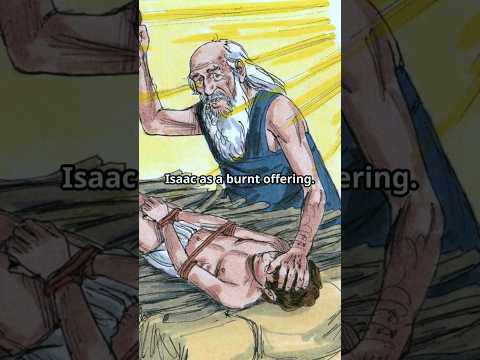
    In this story, Abraham—already tested throughout his life—is called once more to step into the unknown. God commands him to offer his son Isaac, the child of promise, as a burnt offering. The test is stark. The silence from heaven is deafening. And yet, Abraham responds not with argument or delay, but with obedience.

    More Than Just a Test

    The test of Abraham is more than a moment of personal trial. It marks a turning point in the biblical story, highlighting the interplay between divine sovereignty and human responsibility. Abraham had waited decades for Isaac, the son God promised would carry on the covenant. Now, that very promise seemed on the brink of destruction.

    This wasn’t about blind submission. The real focus of the story lies in faith under pressure—faith that trusts beyond logic. Abraham’s willingness to follow through was not rooted in fear but in the belief that somehow, God would provide.

    And God does. At the very last moment, a ram appears, caught in a thicket. Isaac is spared. The covenant continues. And the mountain becomes a place not of sacrifice, but of provision and revelation.

    God as Provider

    The test of Abraham reveals something profound about God. He is not a distant deity demanding cruel obedience. He is present in the trial and ultimately shows Himself to be a provider. This moment foreshadows countless other moments throughout Scripture where God steps in—not to destroy, but to save.

    For readers of faith, this story challenges us to examine our hearts: Where do we draw the line with trust? Do we follow only when the path makes sense, or even when it doesn’t? Do we offer God everything—or only what’s convenient?

    The test was never about Isaac. It was about Abraham’s heart. And by extension, it invites us to consider the condition of our own.

    Faith That Walks

    One of the most striking elements of the story is its quiet simplicity. Abraham wakes early, gathers what he needs, and walks toward the unknown. There’s no recorded protest, no theological debate—just action. This is a different kind of faith. It’s not loud or flashy. It walks.

    The test of Abraham reminds us that faith isn’t just belief—it’s movement. It’s saying yes to God before the outcome is clear. It’s putting the promise back into God’s hands, trusting that He’s capable of fulfilling it in His own way.

    A Story That Still Speaks

    Though this event occurred thousands of years ago, its implications are timeless. We all face tests—moments when our faith is stretched beyond comfort. Whether it’s in relationships, health, finances, or purpose, we reach points where obedience feels costly.

    The test of Abraham gives us a model. Not a blueprint for suffering, but a testimony of trust. It reminds us that God often works in the eleventh hour—not to torment us, but to reveal something deeper about Himself and about us.

    Final Thoughts

    The test of Abraham is not just a story about one man and his son. It’s about the God who walks with us through fear and uncertainty. It’s about trust that outweighs understanding. It’s about surrender that leads not to loss, but to life.

    In our own spiritual journey, we are each called to moments of deep trust. And when we, like Abraham, walk forward in faith—especially when the path is unclear—we open ourselves to divine provision we couldn’t have predicted.

    The Test of Abraham: Faith and Obedience in Genesis 22.
    The Test of Abraham: Faith and Obedience in Genesis 22.

    P.S. If this story gave you a fresh lens on faith, obedience, or provision, subscribe to Holy Thread Project on YouTube for more short-form biblical insights that speak to real life.

    #TestOfAbraham #Genesis22 #HolyThreadProject #BiblicalFaith #GodProvides #FaithAndObedience

  • Genesis 21: When Isaac Was Born to Sarah and Abraham.

    Genesis 21 — When Isaac Was Born to Sarah and Abraham | God’s Promise Fulfilled.
    Genesis 21: When Isaac Was Born to Sarah and Abraham.

    Genesis 21: When Isaac Was Born to Sarah and Abraham.

    How Faith, Waiting, and God’s Promise Collide in a Single Moment


    The Waiting Season No One Wants

    Waiting tests even the strongest hearts. When God makes a promise, but time drags on, questions start to rise: Did I hear right? Did God forget?
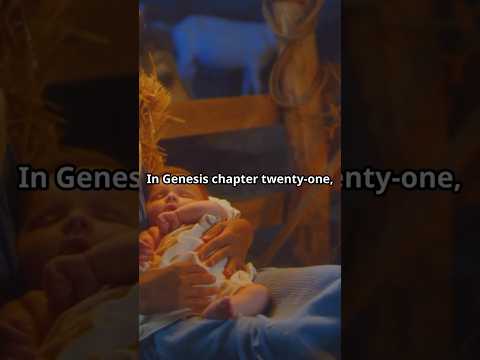
    For Abraham and Sarah, the wait for a child stretched across decades. But in Genesis 21, something extraordinary happens: the long-awaited son is born.

    Sarah, once barren and in old age, gives birth to Isaac, whose name means “he laughs.” The name is no accident. It reflects not only joy—but the unbelievable nature of God’s work. At 90 years old, Sarah laughs not in doubt but in awe. God had remembered her.


    Genesis 21: The Fulfillment of a Divine Covenant

    Genesis 21 isn’t just about the birth of a child. It’s about a promise fulfilled, a covenant realized. Back in earlier chapters, God had promised Abraham descendants as numerous as the stars. But time kept passing—and no son came.

    Now, in Abraham’s 100th year, that promise comes to life. Isaac’s birth marks a turning point not only for Abraham’s family but for the entire biblical narrative. From this child, a nation will be born—Israel.

    This chapter reminds us that when God speaks, delay does not mean denial. His timeline may not match ours, but it is always on time.


    The Power of a Laugh

    Sarah’s laugh is more than a reaction—it’s a prophecy. Her laughter becomes the name of her son, and her story echoes through time as a witness to God’s ability to do the impossible.

    How many of us have laughed at the idea that our circumstances could change? That God could bring life into something that looks dead? That joy could rise where grief once ruled?

    Genesis 21 says yes. Yes, He can. Yes, He will. Yes, He does.


    Lessons from Genesis 21 for Today

    Even though this story is ancient, the spiritual truth is timeless. Here’s what we learn:

    • God doesn’t forget promises
      – Even if it takes years, what He speaks will come to pass.
    • Faith requires endurance
      – Abraham and Sarah weren’t perfect, but they held on.
    • Joy follows obedience
      – When we trust the process, joy becomes our reward.
    • Nothing is impossible with God
      – Barren wombs, old age, and hopeless odds are no obstacle to Him.

    A Birth That Leads to a Nation

    The impact of Genesis 21 goes beyond Abraham’s tent. Isaac’s birth sets the stage for the rest of the Old Testament. Through Isaac comes Jacob, and through Jacob come the twelve tribes of Israel.

    This moment is not just a family milestone—it’s a spiritual legacy. The laughter that filled Sarah’s tent still echoes in every person who learns to trust God during a long night of waiting.


    You’re Not Forgotten—You’re Being Prepared

    Maybe you’re in a waiting season right now. Maybe you’ve been holding on to a promise for a long time, wondering if it will ever come to pass.

    Let Genesis 21 speak to your heart: God is not slow. He is not distant. He is shaping, preparing, and aligning everything for the moment when the promise arrives.

    When it does, you won’t just receive the blessing—you’ll understand the journey that led to it.


    Want More? Stay Connected.

    If this story moved you, subscribe to HolyThreadProject for more short-form Bible reflections, faith-building content, and spiritual insight drawn straight from Scripture.

    We believe the Bible isn’t just a book—it’s a thread that connects us to purpose, promise, and the presence of God.

    Genesis 21: When Isaac Was Born to Sarah and Abraham.
    Genesis 21: When Isaac Was Born to Sarah and Abraham.

    P.S.
    Laughed at the idea that God still moves? So did Sarah—right before He did the impossible.
    ✨ Subscribe to HolyThreadProject on YouTube for more moments like this—because the story isn’t over, and neither is yours.

    #Genesis21 #IsaacIsBorn #GodsPromise #FaithInGod #BibleStories #HolyThreadProject #AbrahamAndSarah #OldTestament #SpiritualGrowth #ChristianFaith