Tag: Bible explained

  • 2 Samuel 8: The Expansion of David’s Kingdom and Power.

    2 Samuel 8: The Expansion of David’s Kingdom and Power.
    2 Samuel 8: The Expansion of David’s Kingdom and Power.

    2 Samuel 8: The Expansion of David’s Kingdom and Power.

    The chapter of 2 Samuel 8 presents a powerful moment in biblical history where leadership, faith, and victory come together. This passage highlights how King David establishes his kingdom through strength, wisdom, and reliance on God. As we explore the meaning behind this chapter, we begin to understand that this is not just a story of conquest, but a deeper lesson about divine purpose and faithful leadership.

    In this chapter, David’s success is not portrayed as mere military dominance. Instead, it reflects a consistent pattern of trust in God, which leads to stability and growth. The events described in 2 Samuel 8 remind us that lasting success is built on a strong spiritual foundation.

    Historical Context and Background

    To fully understand 2 Samuel 8, it is important to consider the historical setting. At this point in Israel’s history, David has already been established as king and has unified the tribes. The surrounding nations, however, still pose threats to Israel’s security and peace.

    The events of this chapter take place during a time when territorial control and military strength were essential for survival. David’s campaigns against neighboring nations demonstrate both strategic leadership and the fulfillment of God’s promises to Israel.

    This moment shows how David moves from securing his throne to expanding his influence, turning Israel into a strong and respected kingdom.

    David’s Military Victories

    One of the central themes in 2 Samuel 8 is victory in battle. David defeats several powerful enemies, securing Israel’s borders and bringing stability to the region. These victories are not random or purely political; they are presented as part of a larger divine plan.

    There is a clear emphasis that God gives David success wherever he goes. This recurring idea reinforces the belief that David’s strength comes not only from his army, but from his faith and obedience.

    The victories described serve as a reminder that challenges can be overcome when aligned with a greater purpose.

    The Expansion of the Kingdom

    As David wins battles, his kingdom begins to expand significantly. 2 Samuel 8 shows how these victories lead to increased influence and control over surrounding territories. Tribute from conquered nations begins to flow into Israel, strengthening the nation’s economy and resources.

    This expansion is not just about power; it represents the establishment of order and stability. David transforms Israel into a central authority in the region, creating conditions for peace through strength.

    The growth of the kingdom also fulfills earlier promises made to Israel.

    Leadership and Governance

    Beyond warfare, this chapter highlights David’s role as a just and righteous ruler. It emphasizes that he administers justice and fairness among his people. This aspect of leadership is crucial because it shows that true authority is not only about winning battles but also about governing wisely.

    In 2 Samuel 8, David appoints officials and organizes his administration, ensuring that the kingdom functions effectively. This structure reflects a balance between strength and fairness.

    David’s example teaches that leadership requires responsibility, integrity, and a commitment to serving others.

    Spiritual Lessons and Meaning

    At its core, 2 Samuel 8 carries a strong spiritual message. The repeated theme that God grants David victory underscores the importance of faith. Success is not portrayed as self-made, but as something that flows from a relationship with God.

    The lessons found here encourage readers to reflect on their own lives. Trusting in God, staying faithful, and acting with integrity are principles that extend far beyond the historical setting.

    This passage also reminds us that blessings and success come with responsibility.

    Relevance for Today

    Even in a modern context, 2 Samuel 8 remains relevant. The themes of leadership, perseverance, and faith resonate with everyday challenges. Whether in personal life, work, or community, the principles demonstrated by David can still be applied.

    It teaches that true success is not only about achievement but about how that success is obtained and used. It encourages a mindset that values purpose over power and faith over fear.

    Conclusion

    The message of 2 Samuel 8 is both timeless and powerful. It combines history, leadership, and spiritual insight into a single narrative that continues to inspire. David’s victories, the expansion of his kingdom, and his commitment to justice all point to a deeper truth about faith and purpose.

    As we reflect on 2 Samuel 8, we are reminded that true strength comes from alignment with God’s will.

    2 Samuel 8: The Expansion of David’s Kingdom and Power.
    2 Samuel 8: The Expansion of David’s Kingdom and Power.

    P.S. If you enjoyed this breakdown of 2 Samuel 8, consider subscribing to HolyThreadProject on YouTube for short, powerful Bible insights that bring scripture to life.

    #BibleStudy #ChristianFaith #OldTestament #BibleExplained #FaithInGod #KingDavid #Scripture #ChristianLiving #BibleTeaching #HolyThreadProject

  • Exodus 23 Explained | Bible Laws on Justice, Mercy & Faith.

    Exodus 23 Explained | God’s Laws on Justice, Mercy, Compassion, and True Faith.
    Exodus 23 Explained | Bible Laws on Justice, Mercy & Faith.

    Exodus 23 Explained | Bible Laws on Justice, Mercy & Faith.

    The Bible is full of instruction that speaks across time, offering wisdom that shaped the ancient world and still guides people today. The covenant laws given to Israel are a perfect example. They do not just regulate rituals but touch everyday life, reminding God’s people how to act with integrity, compassion, and faith. Among these chapters, Exodus 23 is especially significant. It draws attention to justice in community, compassion toward others, the importance of rest, and God’s ongoing promise to guide His people.

    The Context of Exodus 23

    Following the Ten Commandments, the laws in this chapter expand on what a faithful life looks like in practice. They emphasize truth, fairness, and care for the vulnerable. Rules against spreading false reports, warnings against accepting bribes, and instructions to treat even enemies with kindness show that justice and mercy belong together. Commands about Sabbath rest highlight God’s design for balance and renewal, while the closing promise of divine guidance assures Israel that they would not walk alone. Far from being outdated, these words contain principles that can be applied in any generation.

    Key Teachings in the Chapter

    The lessons of Exodus 23 can be summarized through four central themes:

    • Justice and Honesty: False testimony and corruption are forbidden, showing that God values truth above personal advantage.
    • Compassion in Action: Acts of kindness are commanded even toward opponents, demonstrating that mercy is stronger than retaliation.
    • Sabbath Rest: Both people and animals are included in God’s command to rest, reminding us that renewal is part of divine order.
    • God’s Guidance: The chapter concludes with the assurance that an angel will go before Israel, protecting and leading them into the promised land.

    Relevance for Modern Life

    Although centuries have passed, the principles in this chapter remain powerful. Justice is still the foundation of strong communities. Honesty in speech and conduct builds trust in workplaces, families, and governments. Compassion toward others—including those we might see as opponents—creates opportunities for reconciliation in divided times. Rest is just as necessary today as it was then, offering balance in a culture that often glorifies constant activity. Finally, the promise of God’s guidance offers hope to anyone facing uncertainty, reminding us that divine presence is not confined to the past but active in every age.

    Practical Applications Today

    The wisdom of Exodus 23 becomes real when put into practice:

    • Commit to Integrity: Speak truthfully in all circumstances, knowing that honesty honors God.
    • Choose Mercy: Extend kindness, even when it is undeserved, allowing compassion to break cycles of hostility.
    • Protect Rest: Keep rhythms of pause and renewal, trusting that rest is not wasted time but part of spiritual health.
    • Rely on God’s Guidance: In moments of decision or challenge, remember that divine direction is promised to those who walk faithfully.

    By living out these values, the ancient words of scripture are transformed into a guide for daily choices, relationships, and spiritual growth.

    Conclusion

    Exodus 23 is far more than a list of rules. It is a call to live in harmony with God’s character—truthful, compassionate, balanced, and faithful. The instructions given to Israel reveal a God who cares deeply about justice and mercy, who values rest as much as work, and who promises to walk with His people. For modern readers, these themes remain profoundly relevant. By embracing them, we not only honor ancient wisdom but also build lives and communities shaped by integrity, kindness, and trust in God’s enduring promise.

    Exodus 23 Explained | Bible Laws on Justice, Mercy & Faith.
    Exodus 23 Explained | Bible Laws on Justice, Mercy & Faith.

    P.S. If this reflection spoke to you, subscribe to HolyThreadProject on YouTube for more scripture insights, biblical wisdom, and timeless lessons of faith. 🙏

    #BibleWisdom #HolyThreadProject #BibleStudy #ScriptureExplained #FaithAndJustice #GodsLaw #ChristianTeachings #BiblicalInsights #SpiritualGuidance #TimelessWisdom

  • Exodus 22 Explained | Bible Law, Justice & Divine Teachings.

    Exodus 22 Explained | God’s Laws of Justice, Restitution, and Divine Compassion.
    Exodus 22 Explained | Bible Law, Justice & Divine Teachings.

    Exodus 22 Explained | Bible Law, Justice & Divine Teachings.

    The Bible is filled with chapters that tell stories and provide practical instruction for living a life of faith. Among these, Exodus 22 stands out as a text focused on justice, fairness, and compassion. It addresses the way people are to treat one another, especially in areas of property, responsibility, and care for the vulnerable. While written thousands of years ago, the principles found here are still deeply relevant today, offering timeless guidance for both individuals and communities.

    The Context of Exodus 22

    Set within the larger framework of the Old Testament laws, Exodus 22 follows the Ten Commandments and builds upon God’s covenant with His people. Where the commandments give broad moral direction, this chapter provides specific applications. It deals with disputes, restitution, and the treatment of strangers, widows, and orphans. Rather than being outdated or irrelevant, these details reveal God’s concern for justice and His desire for people to live responsibly with one another.

    Key Themes in Exodus 22

    Several important themes emerge throughout the chapter:

    • Justice and Fairness: The laws outline restitution when someone has caused loss or harm, reminding us that justice requires accountability.
    • Responsibility in Relationships: Whether in financial matters or personal conduct, individuals are called to act with integrity.
    • Compassion for the Vulnerable: The text emphasizes protecting those without power, such as widows, orphans, and foreigners.
    • Respect for God: The chapter also reminds readers that obedience to divine instruction is part of honoring God Himself.

    Together, these themes show that faith is not only about belief but also about daily actions that reflect God’s character.

    Lessons for Modern Life

    Although written in an ancient cultural setting, the lessons from Exodus 22 still resonate in today’s world. We may not deal with livestock disputes or property boundaries in the same way, but we do face issues of honesty, fairness, and social responsibility. When applied thoughtfully, the principles of restitution encourage us to take ownership of our mistakes and make things right with others.

    The call to protect the vulnerable also challenges modern readers to look beyond themselves. Just as God’s people were commanded to care for those at risk, so too are we invited to show compassion in our communities. Whether through acts of kindness, advocacy, or generosity, these actions reflect the heart of biblical teaching.

    Practical Applications

    How can believers live out the wisdom of this chapter today?

    • Practice Accountability: When harm is done—whether financial or relational—make amends promptly and sincerely.
    • Show Compassion: Pay attention to those who may be overlooked, including the poor, the marginalized, and the lonely.
    • Honor Commitments: Let your words and promises be trustworthy, reflecting the integrity taught in Scripture.
    • Keep God Central: Remember that justice and mercy are not human inventions but flow from God’s own nature.

    By practicing these principles, we bring the wisdom of this ancient text into modern life, making it more than words on a page but a living guide for faith and character.

    Conclusion

    Exodus 22 is more than a collection of ancient laws—it is a chapter that reveals God’s heart for justice, mercy, and responsibility. It reminds us that faith is not abstract but deeply practical, shaping how we treat others and how we honor God. The instructions given to Israel echo through history, calling each new generation to live with integrity, compassion, and reverence. By applying its lessons today, we find guidance for a life that reflects the values of Scripture while building communities rooted in fairness and love.

    Exodus 22 Explained | Bible Law, Justice & Divine Teachings.
    Exodus 22 Explained | Bible Law, Justice & Divine Teachings.

    P.S. If this reflection inspired you, subscribe to Holy Thread Project on YouTube for more scripture insights, biblical wisdom, and timeless spiritual teachings. 🙏

    #BibleWisdom #HolyThreadProject #BibleStudy #ScriptureExplained #FaithAndJustice #GodsLaw #ChristianTeachings #BiblicalInsights #SpiritualGuidance

  • Exodus 1 | Israelites Oppressed in Egypt | Bible Explained.

    Exodus 1 Explained: Israelites Oppressed in Egypt | Bible Story Insight.
    Exodus 1 | Israelites Oppressed in Egypt | Bible Explained.

    Exodus 1 | Israelites Oppressed in Egypt | Bible Explained.

    The Book of Exodus begins with a dramatic shift in the story of God’s people. After the death of Joseph, who once saved Egypt from famine, a new pharaoh rose to power. This ruler did not remember Joseph’s wisdom or his contribution to the nation. Instead, he feared the growing strength of the Israelites. Exodus 1 opens not with peace but with oppression, setting the stage for one of the greatest stories of deliverance in Scripture.

    The Israelites Multiply in Egypt

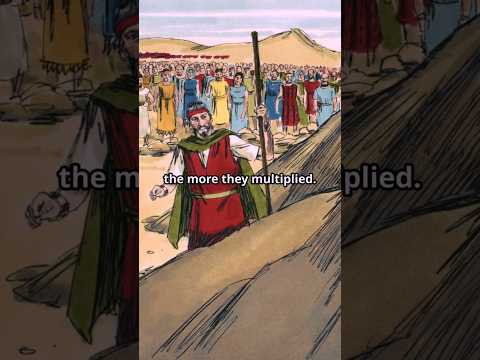
    Exodus 1 describes how the Israelites, once welcomed, became viewed as a threat. The text explains that the people were fruitful and multiplied greatly, filling the land. Their numbers grew so large that Pharaoh worried they might join Egypt’s enemies in case of war. Fear took root in the king’s heart, and he decided to enslave them.

    This chapter shows a timeless truth: when fear rules, injustice often follows. Pharaoh’s insecurity turned into harsh labor and bitter bondage for the Israelites. Yet the more they were oppressed, the more they increased. Human cruelty could not stop God’s blessing.

    Oppression as a Tool of Control

    The strategy of Pharaoh in Exodus 1 was clear—use oppression to control. He set taskmasters over the Israelites, forcing them into hard labor, building cities, and carrying heavy burdens. His goal was to break their spirit and slow their growth. But the opposite happened. The people remained strong, their numbers continued to rise, and the Egyptians grew more alarmed.

    This passage highlights how oppression rarely achieves the outcome rulers desire. Instead of crushing a people, it typically strengthens their resolve and identity.

    God’s Promise Remains Unbroken

    One of the most powerful lessons of Exodus 1 is that no human plan can undo God’s promise. Long before Egypt enslaved the Israelites, God had told Abraham that his descendants would be as numerous as the stars. Pharaoh’s attempt to erase that promise failed. In fact, his cruelty only pushed the story of deliverance forward, preparing the way for Moses and the great journey out of Egypt.

    This truth speaks to us today: even in seasons of hardship, God’s purposes remain steady.

    Lessons for Today

    The message of Exodus 1 still resonates in modern life. We may not face the slavery of ancient Egypt, but fear, injustice, and oppression still exist in many forms. This passage reminds us that:

    • Fear can distort judgment and lead to harm.
    • Oppression cannot silence truth or hope.
    • Faith keeps people alive even in dark seasons.
    • God’s promises endure beyond human schemes.

    When we read this chapter, we are invited to reflect on how we respond to fear. Do we let it turn into cruelty, or do we seek wisdom and faith?

    Conclusion

    Exodus 1 is more than a historical account; it is a mirror showing how fear shapes actions and how God’s plan outlasts human power. The Israelites suffered under Pharaoh’s harsh rule, yet their story did not end there. Instead, their struggle became the foundation for one of the most powerful narratives in the Bible—their deliverance from Egypt.

    This opening chapter sets the tone for the entire book of Exodus. It reminds us that oppression may rise, but God’s promise remains firm. Even in suffering, hope is alive, and faith points the way to freedom.

    Exodus 1 | Israelites Oppressed in Egypt | Bible Explained.
    Exodus 1 | Israelites Oppressed in Egypt | Bible Explained.

    P.S. If you found insight in this story, don’t miss the rest of our journey through Exodus. Be sure to subscribe to HolyThreadProject on YouTube for more Bible explained content and timeless lessons of faith. 🙏

    #Exodus1 #Exodus #BibleExplained #BibleStories #Faith #LifeLessons #Scripture #Wisdom #SpiritualGrowth #Shorts

  • Genesis 28 Explained: The Vision of Jacob’s Ladder.

    Genesis 28 Explained: The Vision of Jacob’s Ladder — Bethel Vision & God’s Word!
    Genesis 28 Explained: The Vision of Jacob’s Ladder.

    Genesis 28 Explained: The Vision of Jacob’s Ladder.

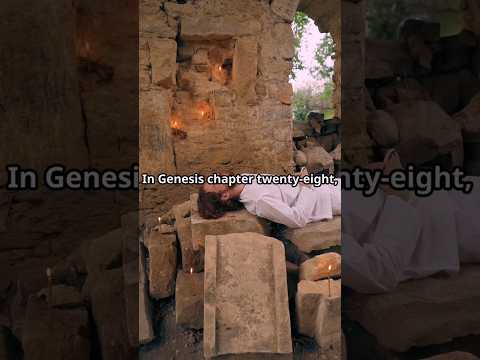
    The account in Genesis 28 is one of the most compelling and symbolic moments in the Old Testament. It takes place during a turning point in Jacob’s life, when he is leaving home under tense circumstances. Alone on the road, with nothing but a stone for a pillow, Jacob falls asleep and receives a vision that will forever shape his understanding of God. In his dream, he sees a ladder—or stairway—stretching from earth to heaven, with angels moving up and down. At the top of the ladder stands the Lord Himself, speaking words of promise and reassurance.

    This is more than just an ancient dream—it is a revelation about God’s nearness, His covenant, and the ongoing connection between the spiritual and earthly realms.

    The Setting of Genesis 28

    The background of Genesis 28 is filled with family conflict and uncertainty. Jacob has just received his father Isaac’s blessing, intended for the firstborn, and his brother Esau is furious. To avoid danger, Jacob travels toward Haran, the homeland of his mother’s family. On his journey, he stops for the night in an unfamiliar place, resting his head on a stone.

    It is here, in a moment of vulnerability, that God breaks through Jacob’s circumstances with a powerful vision. The ladder in Jacob’s dream represents a direct link between heaven and earth. The angels traveling upon it show that God’s work is constant, and His presence reaches into every part of creation.

    The Message of the Vision

    In Genesis 28, God speaks directly to Jacob, reaffirming the promises made to Abraham and Isaac: the gift of the land, countless descendants, and blessings that will extend to all nations through his lineage. More than that, God makes a personal promise: “I am with you and will watch over you wherever you go.”

    This moment is a reassurance not just for Jacob, but for all readers of Scripture. It tells us that God’s covenant is enduring and His presence is not confined to a single place. The ladder imagery reminds us that the spiritual realm is not distant—it is intertwined with our daily lives.

    Lessons for Modern Readers

    The vision in Genesis 28 speaks across time. Like Jacob, we may find ourselves in places of uncertainty, transition, or even fear. Yet the message is the same: God is present, His promises are trustworthy, and His purposes are unfolding even when we cannot see the full picture.

    Jacob’s awakening is particularly meaningful—he declares, “Surely the Lord is in this place, and I was not aware of it.” This is a reminder for us to remain attentive to God’s presence, even in ordinary or difficult moments.

    Practical Applications of Genesis 28

    To apply the truths of Genesis 28 in our daily lives, we can:

    • Pause to acknowledge God’s presence in the middle of routine tasks.
    • Trust in His promises when facing challenges or transitions.
    • Remember that He is at work behind the scenes, connecting heaven and earth.
    • Approach each day with the awareness that divine encounters can happen anywhere.

    These practices help us live with greater faith, attentiveness, and peace.

    Conclusion

    The vision of Jacob’s Ladder in Genesis 28 continues to inspire believers with its message of connection, covenant, and divine care. Just as God met Jacob in a lonely, uncertain place, He meets us in the midst of our journeys. His ladder is still in place, the angels still ascend and descend, and His presence still bridges the gap between heaven and earth.

    For those who seek Him, this story is a powerful reminder that God is closer than we think—and His promises stand firm through every season of life.

    Genesis 28 Explained: The Vision of Jacob’s Ladder.
    Genesis 28 Explained: The Vision of Jacob’s Ladder.

    P.S. If you enjoyed this reflection and want more Bible-based insights, subscribe to HolyThreadProject on YouTube so you never miss a new study or devotional.

    #Genesis28 #JacobsLadder #BibleStudy #BibleLesson #BiblicalInsights #ScriptureExplained #FaithLessons #OldTestament #ChristianFaith #GodsPromise #BibleExplained #BibleStory #SpiritualGrowth #BiblicalTeaching #FaithInspiration