Tag: HolyThreadProject

  • Judah and Tamar—Genesis 38 Bible Story of Redemption.

    Judah and Tamar—Genesis 38 Bible Story of Redemption, Justice, and Grace.
    Judah and Tamar—Genesis 38 Bible Story of Redemption.

    Judah and Tamar—Genesis 38 Bible Story of Redemption.

    The Bible is full of stories that reveal the depth of God’s wisdom, even through difficult and messy circumstances. One of the most striking is found in Genesis 38, where the account of Judah and Tamar shows how God’s larger plan works even through human weakness. At first glance, it is a troubling chapter, but within its verses we find profound lessons of justice, humility, and redemption.


    The Background

    Genesis 38 interrupts the narrative of Joseph, who had been sold into slavery by his brothers. The text suddenly shifts focus to Judah, one of Jacob’s sons. At first, this might seem like an unnecessary detour, but it serves an important purpose. While Joseph’s story highlights God’s providence in Egypt, this passage reminds us that God is also shaping the family line that will lead to Israel’s future king and eventually to the Messiah.


    Tamar’s Struggle

    Tamar, a widow in Judah’s household, was promised a future through the family’s younger son. However, when that promise was not kept, she was left vulnerable and without protection. In desperation, she took a bold and unconventional step. Disguising herself, she confronted the injustice she faced and forced the truth into the open.

    When the reality was revealed, Judah responded with humility. His words—“She is more righteous than I”—marked a turning point. Instead of denying responsibility, he admitted his fault. This moment of honesty is what makes the story stand out as more than just a tale of struggle; it becomes a lesson in accountability.


    Lessons from Genesis 38

    The story carries timeless truths that remain relevant today:

    1. Accountability matters. Judah’s admission of wrongdoing shows that healing begins with honesty.
    2. God works through imperfection. Even when promises are broken, His purposes move forward.
    3. Courage brings justice. Tamar’s persistence reminds us that truth often requires boldness.
    4. Redemption is possible. Out of a messy and painful story comes hope and restoration.

    Why This Story Matters

    What makes this passage even more powerful is its place in biblical history. From the line of Judah and Tamar would eventually come King David, and generations later, Jesus Christ. A situation that looked like failure was woven into God’s greater plan of salvation.

    For readers today, this is deeply encouraging. Life rarely goes the way we expect, and our choices are typically flawed. Yet the story of Judah and Tamar reassures us that God’s purposes are not defeated by human weakness. In fact, He can transform brokenness into a foundation for blessing.


    Applying the Wisdom Today

    So how can we apply the lessons of Genesis 38 in our lives?

    • Be truthful. Like Judah, we should admit when we fall short. Honesty leads to growth.
    • Stand for justice. Like Tamar, we are called to act with integrity and courage.
    • Trust God’s timing. Even when situations seem hopeless, God is still working.
    • Value small decisions. Each choice builds character and contributes to the bigger picture.

    Living out these principles helps us to grow in faith and to trust in God’s redemptive power.


    Conclusion

    The story of Judah and Tamar is more than just an ancient narrative. It is a reminder that God’s plan can shine through failure, and that redemption often begins with humility and courage. Genesis 38 teaches us that no situation is beyond God’s ability to transform.

    As we reflect on this chapter, we are invited to embrace accountability, pursue justice, and trust in the God who turns even the most difficult stories into testimonies of hope.

    Judah and Tamar—Genesis 38 Bible Story of Redemption.
    Judah and Tamar—Genesis 38 Bible Story of Redemption.

    PS: If this story encouraged you, subscribe to HolyThreadProject on YouTube for more inspiring Bible stories and timeless lessons of faith. 🙏✨

    #BibleStory #Genesis38 #FaithAndRedemption #BibleLessons #ScriptureWisdom #BiblicalStories #SpiritualGrowth #HolyThreadProject


  • Genesis 36: Esau’s Descendants and Legacy Explained.

    Genesis 36: Esau’s Descendants and Legacy Explained — The Making of Edom’s Lineage.
    Genesis 36: Esau’s Descendants and Legacy Explained.

    Genesis 36: Esau’s Descendants and Legacy Explained.

    Many readers skim past genealogies in the Bible, but they hold profound meaning. Genesis 36 is a prime example. On the surface, it looks like a long list of names, yet it carries insights into heritage, identity, and God’s unfolding plan. This chapter focuses on Esau, the brother of Jacob, and records how his line developed into leaders, clans, and even kings long before Israel crowned one.

    Who Was Esau?

    Esau was the twin brother of Jacob, sons of Isaac and grandsons of Abraham. While Jacob carried the covenant promise, Esau became the ancestor of the Edomites. His story is often remembered for selling his birthright, but the Bible also records his strength, independence, and growing family line. Far from disappearing, Esau’s descendants formed entire nations that influenced the biblical world.

    The Line of Esau

    In Genesis 36, Scripture carefully traces Esau’s descendants. The chapter highlights chiefs and clans that arose from his sons and grandsons. This genealogy shows that Esau’s family was not only large but politically significant. The Edomites built cities, established rulers, and developed a strong identity that continued through centuries of history.

    One striking detail is that kings came from Esau’s line before Israel had any monarch. This contrast emphasizes the difference between worldly power and covenant purpose. Jacob’s descendants would eventually become the chosen nation, but Esau’s legacy reminds us that God’s plan includes many nations working within the broader story.

    Why Genealogies Matter

    Modern readers often wonder why genealogies take up so much space in the Bible. The answer lies in perspective. Names are not random—they mark connections, fulfill promises, and show God’s faithfulness through generations. In the case of Esau, his descendants reveal how God allowed multiple family lines to flourish, even outside the chosen covenant.

    For Israel, knowing the lineage of surrounding nations provided context for alliances, conflicts, and identity. For us today, genealogies remind us that every life is part of a larger tapestry. Even when a person seems overlooked, their story contributes to history and faith.

    Lessons from Esau’s Legacy

    The story of Esau’s descendants carries several timeless lessons. First, it indicates that choices have long-lasting effects. Esau’s earlier decisions shaped the direction of his family, yet God still allowed his line to prosper. Second, it teaches that greatness is not measured only by power or kingship. While Esau’s descendants rose quickly, Jacob’s line carried the spiritual promise. Third, it underscores that God works through both covenant and non-covenant nations to shape history.

    Relevance for Today

    Though ancient, the genealogy in Genesis 36 speaks to modern readers. It encourages us to look at our family stories and understand how heritage shapes identity. It reminds leaders that influence can come quickly, but lasting impact is tied to values and faith. It also challenges us not to dismiss parts of Scripture that seem dry—because even a list of names can point to God’s larger design.

    Conclusion

    The record of Esau’s descendants in Genesis 36 is far more than a list of forgotten names. It is a testimony of legacy, power, and purpose. While Jacob carried the covenant blessing, Esau’s family became nations that shaped biblical history. Together, their stories reveal the breadth of God’s plan and the importance of every lineage.

    By reflecting on this genealogy, we see that no detail in Scripture is wasted. Each life, each name, and each generation has meaning. The line of Esau reminds us that every family has a legacy, and each of us contributes to the unfolding story of faith.

    Genesis 36: Esau’s Descendants and Legacy Explained.
    Genesis 36: Esau’s Descendants and Legacy Explained.

    P.S. If you enjoyed this deep dive into Genesis 36 and the legacy of Esau, don’t miss future insights! ✨
    👉 Subscribe to HolyThreadProject on YouTube for more Bible stories, wisdom, and Scripture explained.

    #Genesis36 #BibleStories #EsauDescendants #OldTestament #ScriptureExplained #FaithLessons #HolyThreadProject

  • Abraham & Abimelek: A Lesson in Trust—Genesis 20 Explained.

    Abraham & Abimelek — A Lesson in Trust and God’s Protection | Genesis 20 Explained.
    Abraham & Abimelek: A Lesson in Trust—Genesis 20 Explained.

    Abraham & Abimelek: A Lesson in Trust—Genesis 20 Explained.

    Introduction: When Faith Meets Fear

    Genesis 20 presents a surprising twist in the journey of the patriarch Abraham. Known for his faith and obedience, he decides driven not by trust but by fear. He tells King Abimelek of Gerar that Sarah is his sister, not his wife—a lie meant to protect himself. The consequences are immediate, and yet, what unfolds is not condemnation, but a powerful reminder of God’s sovereignty, protection, and grace.

    This chapter offers more than just an ancient narrative. It reveals the struggle between fear and faith, the risks of self-preservation, and the relentless mercy of God even when we falter.

    The Context: A Repeated Mistake

    Genesis 20 isn’t the first time Abraham tells this lie. A similar incident occurs earlier in Genesis 12, suggesting that old fears can resurface even after spiritual growth. Despite God’s repeated promises to protect and bless him, Abraham again relies on his plan to stay safe.

    This highlights a deeply human trait: the tendency to lean on our understanding when circumstances seem threatening. But Genesis 20 teaches us that God’s faithfulness isn’t contingent on our flawless performance.

    Abimelek’s Role: Integrity in Action

    Abimelek, though a pagan king, emerges as a man of integrity. When God appears to him in a dream and reveals the truth about Sarah, he acts quickly and righteously. He confronts Abraham, restores Sarah without harming her, and even blesses Abraham with land and gifts.

    This part of the story shifts the focus. While Abraham is seen acting out of fear, Abimelek responds to divine revelation with obedience. It’s a reminder that God’s truth can reach beyond religious boundaries and stir the hearts of anyone willing to listen.

    Divine Protection and Purpose

    One of the most powerful elements of this chapter is the way God protects His promise. Despite Abraham’s deception, God intervenes directly to prevent Sarah from being harmed. His covenant with Abraham is not derailed by human weakness.

    Even more striking is that God calls Abraham to pray for Abimelek’s household to be healed, restoring fertility after God had temporarily closed all the wombs in Abimelek’s household. This moment is filled with irony and grace: the man who endangered others through his lie becomes the very vessel God uses to bring healing.

    Trusting God With the Unknown

    Genesis 20 challenges us to consider how we respond when circumstances make God’s promises feel distant. Abraham had heard God’s voice and seen His provision, yet he still fell back on fear. We’re not so different. Trusting God isn’t a one-time decision—it’s a daily choice, especially when the stakes are high.

    This story invites us to walk in deeper trust, even when logic tells us to take control. It also reassures us that when we stumble, God doesn’t abandon us. He corrects, protects, and continues His purpose through us.

    A Lesson for Today

    The account of Abraham and Abimelek may be ancient, but its lesson is timeless. Faith doesn’t mean we never make mistakes. It means that even in our failure, God remains faithful. He’s not looking for perfection—He’s looking for hearts willing to return to Him.

    This chapter reminds us that fear can distort our actions, but it doesn’t have to define us. Through honesty, humility, and a return to trust, we find our place again in God’s plan.


    Conclusion

    Genesis 20 reveals that even a great figure like Abraham struggled with fear and failure. Yet, God’s plan moved forward—not because Abraham was perfect, but because God is merciful. As we face our moments of uncertainty, may we be reminded that trust in God isn’t just a concept—it’s a lived commitment, renewed day by day.

    Abraham & Abimelek: A Lesson in Trust—Genesis 20 Explained.
    Abraham & Abimelek: A Lesson in Trust—Genesis 20 Explained.

    P.S. If this story sparked reflection or helped you see Scripture in a new light, subscribe to HolyThreadProject on YouTube to get more short, powerful Bible insights.

    #Genesis20 #BibleExplained #FaithLessons #TrustInGod #BiblicalStories #Abimelek #GodIsFaithful #HolyThreadProject #ScriptureReflections #BibleInsights

  • The Fall of Noah: A Warning from Genesis 9:18–29.

    The Fall of Noah: A Warning from Genesis 9:18–29 | When Righteousness Falters.
    The Fall of Noah: A Warning from Genesis 9:18–29.

    The Fall of Noah: A Warning from Genesis 9:18–29.

    In the book of Genesis, we often focus on Noah as a righteous man—the one chosen by God to survive the flood, to build the ark, and to carry life forward into a new world. But what comes after the flood is just as important, and in many ways, more human.
    Genesis 9:18–29 reveals a lesser-known moment in Noah’s life—a personal failure, a moral fall. And with it, a powerful warning.

    Noah’s Vineyard and His Vulnerability

    After the waters recede and the covenant is made, Noah begins a new chapter. He becomes a man of the soil and plants a vineyard. But from this vineyard comes wine, and from the wine—Noah becomes drunk. He lies uncovered in his tent, exposed in both body and dignity.

    It’s a moment of weakness. A deeply human moment.

    Noah, the man who obeyed God in the face of a mocking world, now lies in shame, alone and vulnerable. This scene might seem shocking at first, but it’s a reminder:
    even the righteous can fall.
    Even those chosen and favored by God are not immune to sin, error, or misjudgment.

    The Sons’ Reactions: A Mirror for Us

    The text highlights the response of Noah’s three sons: Ham, Shem, and Japheth.

    Ham sees his father’s nakedness and mocks it—he goes and tells his brothers. It’s a response of disrespect, perhaps even pride. Rather than covering his father, he exposes him further.

    Shem and Japheth, on the other hand, walk into the tent backward. They cover their father without even looking. Their actions are full of honor, humility, and grace.

    And this is the heart of the story:
    Noah’s fall is not the only test—the true test lies in how others respond to his failure.

    A Warning and a Wisdom Thread

    This passage is not merely about drunkenness or shame. It’s a spiritual parable—a mirror for how we deal with the failures of others. When someone in our life falls short, do we expose them, talk about them, or mock them? Or do we cover them, protect their dignity, and extend grace?

    Genesis 9:18–29 reminds us that failure doesn’t define a person, but our reaction to failure reveals our heart. Whether in family, church, community, or friendships, we are constantly given the choice to curse or cover, to gossip or to guard.

    The curse that follows Ham’s action and the blessing that follows Shem and Japheth’s speaks to a broader biblical theme:
    God honors those who honor others, even in their brokenness.

    Why This Story Still Matters

    In today’s world, where people are quick to judge, cancel, or shame, Noah’s story is more relevant than ever. Social media thrives on exposure—on magnifying mistakes. But the kingdom of God operates differently. It seeks restoration, not ridicule. Redemption, not spectacle.

    Whether you’re the one who has fallen or the one watching someone else stumble, Genesis offers this warning and encouragement:
    Handle failure with humility. Offer grace freely. Protect what’s sacred in others.

    Final Thoughts: The Threads of Grace

    At HolyThreadProject, we believe these ancient stories are more than history. They’re threads of divine truth meant to be woven into our daily lives.

    The fall of Noah is not the end of his story—and neither is yours.
    Let it remind you to walk in grace, speak with mercy, and respond to failure with the same love God extends to you.


    May we learn not only to stand in righteousness, but also to kneel in compassion. 🙏

    The Fall of Noah: A Warning from Genesis 9:18–29.
    The Fall of Noah: A Warning from Genesis 9:18–29.

    P.S. If this reflection stirred something in you, consider subscribing to HolyThreadProject on YouTube for more quiet truths, scripture threads, and soul-centered wisdom each week. 🙏

    #HolyThreadProject #Genesis9 #FallOfNoah #BibleWisdom #FaithReflection #SpiritualGrowth #ScriptureMeditation #GraceAndTruth #RighteousFall #CoverNotCurse #BiblicalLessons #DailyFaith #CompassionInFailure #NoahStory #FaithJourney

  • Cain and Abel | Genesis 4:1-2 Bible Story | HolyThreadProject.

    Cain and Abel | Genesis 4:1-2 Bible Story | Jealousy, Worship, and Humanity’s Heart.
    Cain and Abel | Genesis 4:1-2 Bible Story | HolyThreadProject.

    Cain and Abel | Genesis 4:1-2 Bible Story | HolyThreadProject.

    The story of Cain and Abel is one of the earliest—and most heartbreaking—accounts in the Bible. Found in Genesis 4:1-2, this short passage packs timeless truths about human nature, worship, jealousy, and choices. At HolyThreadProject, we’ve retold this iconic Bible story in under a minute to help modern audiences experience the weight and message of Scripture in a fresh and engaging way.

    Two Brothers, Two Offerings

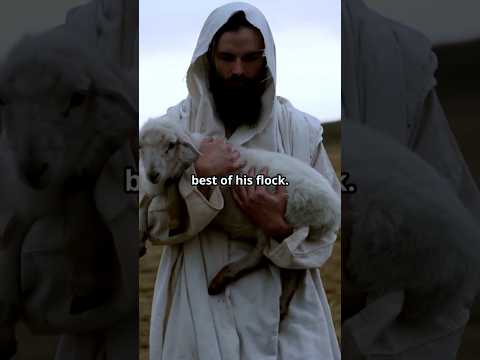
    Cain and Abel were the first children born to Adam and Eve. Cain became a farmer, working the soil, while Abel was a shepherd who raised flocks. Both brothers brought offerings to the Lord—Cain brought crops, and Abel brought the firstborn of his flock.

    At first glance, it might seem like both offerings were good. But Genesis 4 makes it clear: God looked with favor on Abel’s offering, but not Cain’s. Why? The Bible hints that Abel brought his “first and best,” while Cain brought “some” of his produce. This was not just about what was given—but the heart behind the gift.

    The Root of Rejection: Attitude Matters

    This passage reminds us that God sees beyond the surface. He looks at the intent behind our worship. Abel’s offering reflected faith, devotion, and a heart to honor God. Cain’s, on the other hand, was likely routine—just a box checked off.

    When Cain’s offering was rejected, instead of reflecting and repenting, he grew angry. His jealousy toward Abel turned into bitterness—and that bitterness led to violence.

    Sin Is Crouching at the Door

    God, in His mercy, warned Cain. In Genesis 4:7, He tells him,
    “If you do what is right, will you not be accepted? But if you do not do what is right, sin is crouching at your door; it desires to have you, but you must rule over it.”

    This is one of the most powerful lines in the entire story. It shows that sin is always waiting, tempting us when we’re weak or wounded. But God calls us to rise above it—to master our emotions and choose righteousness.

    Cain had a choice. But he let jealousy win.

    The First Murder

    In a field, Cain lured Abel—and killed him. The first murder in human history was not a random act of violence but a spiritual and emotional breakdown fueled by comparison, rejection, and pride.

    When God confronted Cain, he answered coldly: “Am I my brother’s keeper?” This iconic line shows Cain’s refusal to take responsibility. But God, who saw everything, judged Cain and marked him—so he would be protected but never at peace.

    Why This Story Still Matters

    The story of Cain and Abel is not just ancient history. It speaks to all of us today.

    • Are we giving God our best—or just leftovers?
    • How do we respond when others are praised and we feel overlooked?
    • Do we deal with sin when it knocks—or do we let it in?

    This short Bible story teaches about honest worship, heart posture, and the consequences of unchecked emotion. It also reminds us that God offers a way out, even when we feel hurt or rejected.

    Watch the Short and Reflect

    We created this Bible short as part of the HolyThreadProject to help make Scripture feel real, visual, and impactful in under 60 seconds. Whether you’re a lifelong Christian or just beginning to explore the Bible, this video can spark reflection and conversation.

    👉 Subscribe to HolyThreadProject on YouTube to support more creative, visual Bible storytelling.

    Cain and Abel | Genesis 4:1-2 Bible Story | HolyThreadProject.
    Cain and Abel | Genesis 4:1-2 Bible Story | HolyThreadProject.

    Final Thoughts

    Cain and Abel may have lived thousands of years ago, but their choices mirror our struggles today. The question remains: Will we give God our best? Will we rule over sin—or let it rule us?

    We pray this story challenges and encourages you. Share it with someone who needs to hear it today.

    P.S.
    If this story spoke to you, don’t keep it to yourself—share it, bookmark it, and check out more powerful Bible moments brought to life by HolyThreadProject.

    #CainAndAbel #Genesis4 #BibleLessons #HolyThreadProject #FaithStories #ScriptureReflection #OldTestament #BibleTeaching #ChristianInspiration #BibleTruth