Tag: Old Testament Bible lessons

  • Exodus 26—The Curtains, Coverings, and Structure of Worship.

    Exodus 26 Explained | The Sacred Curtains, Coverings, and Structure of Worship.
    Exodus 26—The Curtains, Coverings, and Structure of Worship.

    Exodus 26—The Curtains, Coverings, and Structure of Worship.

    The book of Exodus is filled with rich detail about God’s covenant with His people, and one of the most intriguing chapters is Exodus 26. This passage describes the careful construction of the sacred dwelling, focusing on the curtains, coverings, and frames that formed the Tabernacle. At first glance, these technical instructions may seem like ancient blueprints, but they carry powerful lessons about holiness, worship, and God’s desire to dwell among His people.

    The Curtains and Coverings

    In Exodus 26, the Lord instructs Moses to use scarlet, purple, and fine linen to create beautiful curtains. These were not merely decorations but visual reminders of separation between what is common and what is holy. The coverings, made from goat hair and other materials, formed layers of protection over the sacred space. Together, the curtains and coverings created a dwelling set apart, reminding Israel that God’s presence is both near and sacred.

    The Frames and Structure

    Beyond the fabrics, the chapter describes wooden frames of acacia and the clasps and loops that held everything together. These details symbolized stability, order, and divine precision. Every measurement mattered. The care with which the structure was assembled shows that God values intentionality in worship and expects His people to approach Him with reverence.

    The Meaning Behind the Details

    It is easy to skim through verses filled with measurements and materials, but Exodus 26 reveals a deeper truth: worship is not haphazard. God’s instructions teach us that both the physical and spiritual aspects of worship are meant to reflect His holiness. Just as Israel followed God’s blueprint for the Tabernacle, believers today are called to order their lives according to His Word.

    Lessons for Today

    Though the Tabernacle is no longer with us, the lessons endure. The chapter reminds us that:

    • Details matter: Small acts of obedience carry great spiritual weight.
    • Holiness requires separation: The layers of curtains and coverings remind us to set our hearts apart for God.
    • Structure is essential: Faith flourishes when built on God’s design, not human improvisation.

    Connecting Exodus 25 and 26

    The previous chapter, Exodus 25, focused on the Ark of the Covenant, the central symbol of God’s presence. Exodus 26 builds around that holy center, showing that God not only gives His people His presence but also the proper environment in which to honor Him. Together, these chapters highlight both the intimacy and the reverence of divine worship.

    Conclusion

    While the details of measurements, fabrics, and wooden frames may seem distant, the message of Exodus 26 remains timeless. God cares about how His people approach Him. The curtains, coverings, and structure of the Tabernacle reveal that holiness is not accidental—it is intentional, ordered, and rooted in obedience. For modern believers, this means living thoughtfully, worshiping reverently, and remembering that our lives are also dwelling places of God’s Spirit.

    The next time you read through these verses, consider not just the physical description but the spiritual symbolism. In the careful construction of the Tabernacle, we glimpse a God who longs to dwell with His people and guide them into holiness.

    Exodus 26—The Curtains, Coverings, and Structure of Worship.
    Exodus 26—The Curtains, Coverings, and Structure of Worship.

    PS: If you enjoyed reflecting on Exodus 26, don’t forget to subscribe to HolyThreadProject on YouTube for more Bible study insights and timeless lessons from Scripture.

    Remember: The Tabernacle was more than fabric and wood—it was a living reminder that God desires to dwell with His people. In the same way, our lives today are called to be sanctuaries of His presence, built with intention, holiness, and reverence.

    #Exodus26 #BibleStudy #HolyThreadProject #ScriptureShorts #BibleStories #FaithLessons #OldTestament #ChristianShorts
  • Genesis 28 Explained: The Vision of Jacob’s Ladder.

    Genesis 28 Explained: The Vision of Jacob’s Ladder — Bethel Vision & God’s Word!
    Genesis 28 Explained: The Vision of Jacob’s Ladder.

    Genesis 28 Explained: The Vision of Jacob’s Ladder.

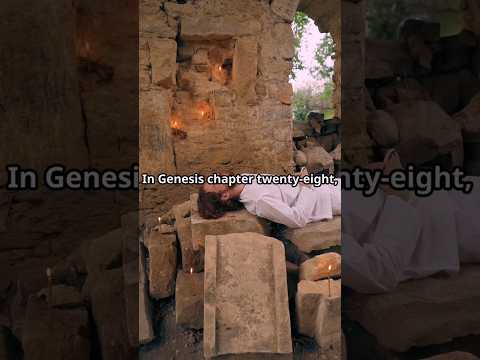
    The account in Genesis 28 is one of the most compelling and symbolic moments in the Old Testament. It takes place during a turning point in Jacob’s life, when he is leaving home under tense circumstances. Alone on the road, with nothing but a stone for a pillow, Jacob falls asleep and receives a vision that will forever shape his understanding of God. In his dream, he sees a ladder—or stairway—stretching from earth to heaven, with angels moving up and down. At the top of the ladder stands the Lord Himself, speaking words of promise and reassurance.

    This is more than just an ancient dream—it is a revelation about God’s nearness, His covenant, and the ongoing connection between the spiritual and earthly realms.

    The Setting of Genesis 28

    The background of Genesis 28 is filled with family conflict and uncertainty. Jacob has just received his father Isaac’s blessing, intended for the firstborn, and his brother Esau is furious. To avoid danger, Jacob travels toward Haran, the homeland of his mother’s family. On his journey, he stops for the night in an unfamiliar place, resting his head on a stone.

    It is here, in a moment of vulnerability, that God breaks through Jacob’s circumstances with a powerful vision. The ladder in Jacob’s dream represents a direct link between heaven and earth. The angels traveling upon it show that God’s work is constant, and His presence reaches into every part of creation.

    The Message of the Vision

    In Genesis 28, God speaks directly to Jacob, reaffirming the promises made to Abraham and Isaac: the gift of the land, countless descendants, and blessings that will extend to all nations through his lineage. More than that, God makes a personal promise: “I am with you and will watch over you wherever you go.”

    This moment is a reassurance not just for Jacob, but for all readers of Scripture. It tells us that God’s covenant is enduring and His presence is not confined to a single place. The ladder imagery reminds us that the spiritual realm is not distant—it is intertwined with our daily lives.

    Lessons for Modern Readers

    The vision in Genesis 28 speaks across time. Like Jacob, we may find ourselves in places of uncertainty, transition, or even fear. Yet the message is the same: God is present, His promises are trustworthy, and His purposes are unfolding even when we cannot see the full picture.

    Jacob’s awakening is particularly meaningful—he declares, “Surely the Lord is in this place, and I was not aware of it.” This is a reminder for us to remain attentive to God’s presence, even in ordinary or difficult moments.

    Practical Applications of Genesis 28

    To apply the truths of Genesis 28 in our daily lives, we can:

    • Pause to acknowledge God’s presence in the middle of routine tasks.
    • Trust in His promises when facing challenges or transitions.
    • Remember that He is at work behind the scenes, connecting heaven and earth.
    • Approach each day with the awareness that divine encounters can happen anywhere.

    These practices help us live with greater faith, attentiveness, and peace.

    Conclusion

    The vision of Jacob’s Ladder in Genesis 28 continues to inspire believers with its message of connection, covenant, and divine care. Just as God met Jacob in a lonely, uncertain place, He meets us in the midst of our journeys. His ladder is still in place, the angels still ascend and descend, and His presence still bridges the gap between heaven and earth.

    For those who seek Him, this story is a powerful reminder that God is closer than we think—and His promises stand firm through every season of life.

    Genesis 28 Explained: The Vision of Jacob’s Ladder.
    Genesis 28 Explained: The Vision of Jacob’s Ladder.

    P.S. If you enjoyed this reflection and want more Bible-based insights, subscribe to HolyThreadProject on YouTube so you never miss a new study or devotional.

    #Genesis28 #JacobsLadder #BibleStudy #BibleLesson #BiblicalInsights #ScriptureExplained #FaithLessons #OldTestament #ChristianFaith #GodsPromise #BibleExplained #BibleStory #SpiritualGrowth #BiblicalTeaching #FaithInspiration

  • Cain’s Offering Rejected — Why God Said No (Genesis 4:3–5).

    Cain’s Offering Rejected — Why God Said No (Genesis 4:3–5) | Heart Over Ritual.
    Cain’s Offering Rejected — Why God Said No (Genesis 4:3–5).

    Cain’s Offering Rejected — Why God Said No (Genesis 4:3–5).

    In the early chapters of Genesis, we find one of the Bible’s most sobering moments of worship gone wrong. Cain and Abel—two brothers, two offerings, and two very different outcomes. One is accepted. One is rejected. And in just a few verses, we learn a powerful truth: God doesn’t just want your gift—He wants your heart.

    The Story: Two Brothers, Two Offerings

    Genesis 4:3–5 says:

    “In the course of time Cain brought some fruits of the soil as an offering to the Lord. And Abel also brought an offering—fat portions from some of the firstborn of his flock. The Lord looked with favor on Abel and his offering, but on Cain and his offering he did not look with favor.”

    At first glance, it may seem unfair. Both brothers gave something. So why did God accept Abel’s offering and reject Cain’s offering? The answer isn’t in the what—but in the how and why.

    The Heart Behind the Offering

    Abel brought the firstborn of his flock and their fat portions—a clear sign that he gave the best he had. His offering was sacrificial, intentional, and rooted in faith. Hebrews 11:4 confirms this:

    “By faith Abel offered God a better sacrifice than Cain did.”

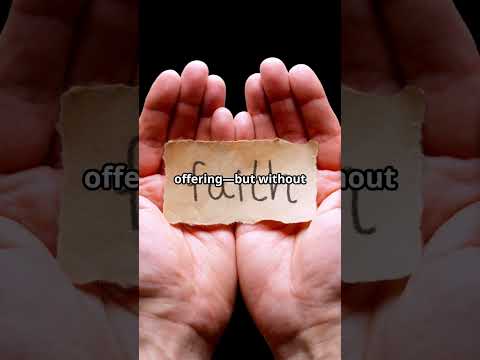
    Cain, on the other hand, simply brought some fruits of the ground. The passage gives no indication that it was the best or first. It was likely given out of obligation, not devotion. He fulfilled the action of giving, but without the attitude of worship.

    This is why Cain’s offering was rejected. God is not impressed by empty gestures or religious routines. He desires authentic faith, genuine reverence, and a heart that seeks to honor Him above all else.

    God Sees Beyond the Surface

    This story isn’t about vegetables versus meat. It’s about spirit versus self. Cain’s attitude was later revealed when he became angry and jealous instead of repentant. Rather than asking God what he could do differently, he turned on his brother. His reaction showed that his heart wasn’t in the right place to begin with.

    God even gives Cain a chance to turn things around. In Genesis 4:6–7, God asks:

    “Why are you angry? Why is your face downcast? If you do what is right, will you not be accepted?”

    God’s grace was still available. Cain could have repented. But instead, he allowed bitterness to lead to violence.

    A Timeless Warning—and a Call to Worship

    This story is a timeless reminder that God weighs the motives of the heart. You can show up at church, give money, and serve in ministry and still be Cain if your heart is disconnected from your offering.

    God isn’t looking for perfect gifts. He’s looking for humble hearts, faithful obedience, and worship that flows from love—not pride.

    It also warns us against comparison and jealousy in our spiritual walk. Cain was focused on Abel instead of focusing on his relationship with God. That distraction led to destruction.

    What This Means for Us

    Ask yourself:

    • Am I giving God my first and best—or my leftovers?
    • Is my worship flowing from love or just habit?
    • When God challenges me, do I get bitter or better?

    God’s rejection of Cain’s offering isn’t meant to discourage us—it’s meant to refine us. He wants us to come back to the heart of worship, where what we bring is less about what’s in our hands and more about what’s in our soul.

    Cain's Offering Rejected — Why God Said No (Genesis 4:3–5).
    Cain’s Offering Rejected — Why God Said No (Genesis 4:3–5).

    P.S.
    Sometimes, the hardest stories in Scripture are the ones we need most. Let Cain’s story remind you: God is not after your stuff—He’s after you. Follow the HolyThreadProject on YouTube for more shorts!


    #CainAndAbel #Genesis4 #HeartOfWorship #BibleStudy #FaithMatters #RejectedOffering #ObedienceOverSacrifice #HolyThreadProject #BibleReflection #WorshipFromTheHeart