Tag: scripture reflection

  • Numbers 32: A Lesson on Faith, Commitment, and Obedience.

    Numbers 32: A Lesson on Faith, Commitment, and Obedience for a Life of Purpose and Renewal.
    Numbers 32: A Lesson on Faith, Commitment, and Obedience.

    Numbers 32: A Lesson on Faith, Commitment, and Obedience.

    The Bible is full of powerful moments where God calls His people to choose trust over fear and obedience over convenience. One of the most practical and relatable examples comes from Numbers 32, a chapter that captures the struggle between comfort, responsibility, and divine direction. Though thousands of years old, this passage still speaks directly into the lives of believers today, especially when we feel torn between what is easy and what is right.

    The Setting and the Request

    In Numbers 32, the tribes of Reuben and Gad approach Moses with a unique request. After traveling through the wilderness for decades, they reach a land east of the Jordan River that seems perfect for their livestock and families. Instead of crossing into the Promised Land with the rest of Israel, they ask to settle where they already are. Their request appears practical, but Moses immediately senses the deeper issue: they are on the edge of God’s promise, yet considering settling short of it.

    This introduces one of the central lessons of the chapter—how easily people can choose what looks comfortable over what God intended.

    The Challenge of Choosing Comfort

    The tribes’ hesitation is something most people can relate to. When faced with a new season, a bigger responsibility, or an unknown step of faith, many prefer what feels safe. The tension found in Numbers 32 mirrors the tension many believers feel today. Are we choosing familiar ground because it’s truly right, or because we fear the unknown?

    Comfort is not always the enemy, but it can become a barrier when God is calling us forward. The land east of the Jordan was good, but it wasn’t the inheritance God had promised. Sometimes “good enough” keeps people from experiencing the fullness of God’s plan.

    Faith That Acts, Not Just Believes

    One of the most overlooked teachings in Numbers 32 is that faith requires movement. Moses reminds the tribes that Israel must continue into the Promised Land, and their absence would discourage everyone else. In other words, faith is not passive. It doesn’t sit on the sidelines. It participates, supports, and moves forward when God speaks.

    Their response is admirable: they agree to fight alongside the other tribes before settling. This shift from hesitation to commitment shows spiritual maturity. They realize that faith means taking action, honoring their responsibilities, and standing with the people God placed around them.

    Unity, Responsibility, and Shared Purpose

    Another rich lesson in Numbers 32 is the importance of unity. The tribes of Reuben and Gad were willing to support the entire nation, even when their personal needs appeared to be met. They chose responsibility over self-interest. This paints a practical picture of what commitment looks like in a community of faith.

    In modern terms, it reminds believers that spiritual maturity involves supporting others, even when life is comfortable for us. The Christian journey is not meant to be walked alone, and obedience often involves lifting others up, serving when needed, and standing firm in unity.

    Obedience That Leads to Blessing

    When Moses agrees to their request, it is not because the tribes convinced him with logic—it is because their promise reflected obedience. They would help secure the land before returning home. This reveals a timeless truth: obedience opens doors that hesitation keeps closed. God honors those who honor Him, especially when they follow through on commitments.

    Many believers today wrestle with decisions that mirror the themes of Numbers 32. Choosing obedience may feel costly at first, but it positions us for long-term blessing, clarity, and growth.

    How to Apply These Lessons Today

    The message of Numbers 32 can guide daily decisions in simple yet powerful ways:

    1. Ask whether your choices are based on fear or faith.
    Sometimes the safest option is the least obedient one.

    2. Stay connected to your spiritual community.
    Support builds strength, and unity strengthens purpose.

    3. Follow through when you commit to something.
    Integrity is one of the clearest signs of spiritual maturity.

    4. Trust that God’s promises require movement.
    You may have to step out before you feel ready.

    Conclusion

    The story captured in Numbers 32 remains relevant because it highlights a universal struggle: the pull between staying where we are and stepping into what God has prepared. The tribes learned that comfort can be tempting, but commitment and obedience carry far greater rewards. Their journey encourages every believer to trust God with courage, stand with others faithfully, and move forward when He calls.

    Numbers 32: A Lesson on Faith, Commitment, and Obedience.
    Numbers 32: A Lesson on Faith, Commitment, and Obedience.

    P.S. If this message encouraged your walk of faith, consider subscribing to HolyThreadProject on YouTube to support more scripture-based inspiration.

    #BibleWisdom #Numbers32 #ChristianFaith #HolyThreadProject

  • Numbers 21 | How God Turned a Moment of Crisis Into Hope.

    Numbers 21 | How God Turned a Moment of Crisis Into Hope for His People in the Wilderness.
    Numbers 21 | How God Turned a Moment of Crisis Into Hope.

    Numbers 21 | How God Turned a Moment of Crisis Into Hope.

    Many passages in Scripture remind us that God often works through moments of struggle, but Numbers 21 stands out as a profound example of how grace can appear right in the middle of hardship. In this chapter, the people of Israel face both the consequences of their choices and the mercy of God. Their story is more than an ancient account—it mirrors the emotional and spiritual challenges many of us experience today. Through their journey, we discover a message of healing, restoration, and renewed trust.

    Understanding the Crisis in the Wilderness

    When reading Numbers 21, we find the Israelites in a difficult season. They are tired of wandering, frustrated by their circumstances, and discouraged by what feels like endless uncertainty. Their complaints arise from impatience, fear, and a lack of trust. This emotional state creates a spiritual opening that leads to struggle. Their crisis is not just physical; it is deeply internal, shaped by the condition of their hearts. The chapter reveals what happens when faith fades and frustration takes its place.

    The Symbol of the Bronze Serpent

    One of the most striking aspects of Numbers 21 is the appearance of the bronze serpent lifted on a pole. After the people return to God and acknowledge their failure, the Lord provides an unexpected symbol of healing. Looking at the serpent was not about magic or superstition—it was an act of trust. It required a shift in perspective, a willingness to look up instead of remaining trapped in fear. This moment reflects a spiritual truth: healing often begins with the courage to lift our eyes from our circumstances and turn toward God.

    A Lesson on Faith and Renewal

    The story found in Numbers 21 teaches that redemption is always possible, even when the situation feels overwhelming. The people’s restoration does not come from their strength but from God’s willingness to meet them with mercy. This message still resonates today. No matter how challenging life becomes, no matter how discouraged we feel, faith can shift the entire trajectory of our experience. The bronze serpent becomes a reminder that God provides a path forward even when the way seems blocked.

    Applying This Teaching to Daily Life

    The events described in Numbers 21 offer practical insight for anyone seeking to grow in spiritual maturity. First, the story reminds us that complaining and dwelling in negativity can cloud our vision. When we focus only on what’s wrong, we lose sight of what God may be doing beneath the surface. Second, it shows the importance of acknowledging our missteps. True transformation often begins with honest reflection. Finally, it highlights the power of simple faith—a willingness to turn toward God when everything in us wants to turn away.

    1. Recognize the Wilderness Seasons

    Just like the Israelites, we all face moments that feel barren or overwhelming. Instead of resisting these seasons, we can learn to see them as opportunities for growth.

    2. Turn Back with Honesty

    The people in Numbers 21 found healing when they returned to God sincerely. Honesty opens the door for renewal and restores clarity.

    3. Look Up Instead of Away

    Turning toward God, even when circumstances are painful, invites hope to re-enter the heart.

    A Message of Transformation

    What makes Numbers 21 so powerful is the way it shows God transforming a moment of judgment into a moment of grace. It reveals a God who listens, who heals, and who guides His people even when they lose their way. The story is not about punishment; it is about restoration. Whether we are facing emotional turmoil, spiritual fatigue, or personal crisis, this passage encourages us to trust that God can bring redemption out of hardship.

    Conclusion: Hope for Every Wilderness

    In the end, Numbers 21 reminds us that hope can rise from the very place that once felt hopeless. The Israelites discovered that healing was closer than they imagined, and the same is true for us today. When we lift our eyes, return to God, and trust His guidance, new strength becomes possible. This timeless message continues to inspire believers to seek renewal, embrace faith, and walk forward with confidence, knowing that God can bring light even into our wilderness moments.

    If you enjoyed this reflection, consider sharing it with someone who needs encouragement today.

    Numbers 21 | How God Turned a Moment of Crisis Into Hope.
    Numbers 21 | How God Turned a Moment of Crisis Into Hope.

    PS: If this message encouraged your heart, consider subscribing to HolyThreadProject on YouTube for more daily Scripture reflections and faith-building inspiration.

    #BibleStudy #Numbers21 #ChristianFaith #HolyThreadProject #ScriptureReflection #ChristianEncouragement #FaithInGod #DailyInspiration
  • Flight from Laban: Jacob’s Journey in Genesis 31 Explained.

    Flight from Laban: Jacob’s Journey of Faith and Freedom in Genesis 31 Explained.
    Flight from Laban: Jacob’s Journey in Genesis 31 Explained.

    Flight from Laban: Jacob’s Journey in Genesis 31 Explained.

    The flight from Laban in Genesis 31 stands as one of the most dramatic and spiritually significant moments in Jacob’s life. It is more than a tale of a man leaving his employer or his home—it’s a rich account of faith, obedience, and divine protection. In this biblical event, we see the intersection of human relationships, God’s timing, and the willingness to step into the unknown when called.

    The Context of Jacob’s Life in Haran

    Jacob had spent two decades in Haran, serving his uncle Laban. Over the years, he married Leah and Rachel, had many children, and built great wealth through flocks and herds. But beneath the surface, tension brewed. Laban’s treatment of Jacob became increasingly unfair, shifting wages and creating an atmosphere of distrust.

    This strained relationship created a perfect backdrop for the flight from Laban. It wasn’t a decision Jacob made lightly—he had deep family ties, financial responsibilities, and the uncertainty of what awaited him back in Canaan. Yet, God’s plans often call for leaving behind even the most established parts of our lives.

    God’s Call to Return Home

    The turning point came when God spoke directly to Jacob, instructing him to return to “the land of your fathers and to your relatives.” This was more than a physical relocation; it was a spiritual step forward. The flight from Laban became an act of obedience, showing Jacob’s trust in God’s promises. He gathered his family and possessions quietly, leaving without informing Laban, knowing that opposition was likely.

    Challenges and Confrontation

    Predictably, Laban did not respond well to Jacob’s sudden departure. He pursued him for days, overtaking Jacob in the hill country of Gilead. The confrontation could have turned violent, but God intervened, warning Laban in a dream not to harm Jacob. This divine intervention demonstrates that when God directs a move, His protection goes before us.

    In their tense meeting, grievances were aired—Laban accused Jacob of deceit, while Jacob defended his actions, pointing to years of faithful service under difficult circumstances. The flight from Laban was not merely about escape; it was about setting boundaries and honoring God’s command.

    Spiritual Lessons from the Flight

    This story holds multiple lessons for modern readers. First, God’s timing is perfect. We may feel the pull to leave a situation long before we act, but when God says “Go,” we can trust His guidance. Second, obedience often comes with risk—Jacob left knowing that Laban might chase him, yet he moved forward in faith. Third, reconciliation is possible even in strained relationships. Jacob and Laban ultimately made a covenant of peace, setting a stone heap as a witness between them.

    Application for Today

    The flight from Laban can symbolize any moment when God calls us out of one season into another. It might be leaving a job, ending a partnership, or moving to a new place. Like Jacob, we may feel fear or uncertainty, but God’s direction is always rooted in His larger purpose. Stepping into the unknown becomes easier when we remember that His presence goes with us.

    This account also reminds us to trust God not only for the destination but for the journey itself. Jacob’s path back to Canaan was not free from challenges, but it was filled with God’s provision and protection.

    Conclusion

    Genesis 31’s flight from Laban is more than an ancient story—it is a living testimony of faith in action. Jacob’s decision to leave, despite the risks, shows that following God’s call is worth any challenge. For those facing transitions today, this passage offers hope: the God who guided Jacob still guides us, protecting our steps and leading us toward His promises.

    Flight from Laban: Jacob’s Journey in Genesis 31 Explained.
    Flight from Laban: Jacob’s Journey in Genesis 31 Explained.

    P.S. If Jacob’s journey in Genesis 31 encouraged your faith, join us on YouTube for more biblical insights and timeless lessons—subscribe to HolyThreadProject and walk the path with us.

    #Genesis31 #BibleStories #JacobsJourney #FaithJourney #GodsGuidance #OldTestament #BibleStudy #ChristianFaith #SpiritualGrowth #BiblicalLessons

  • The Great Flood Rises – Genesis 7:10–24 Explained.

    The Great Flood Rises—Genesis 7:10–24 Explained | Waters of Judgment and Grace.
    The Great Flood Rises – Genesis 7:10–24 Explained.

    The Great Flood Rises – Genesis 7:10–24 Explained.

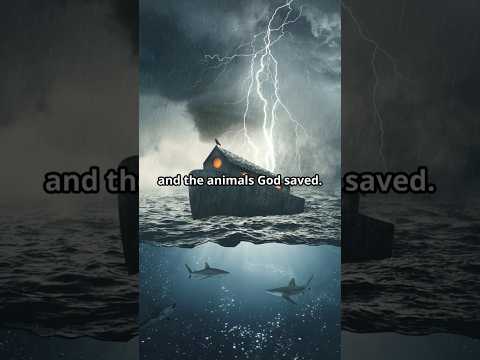
    In Genesis 7:10–24, the story of Noah and the Great Flood reaches its most dramatic moment: the rain begins to fall, and the waters of judgment rise.

    After seven days of waiting—just as God said—the floodgates of the heavens opened, and the fountains of the deep burst forth. Rain fell for 40 days and 40 nights, covering the earth completely. Mountains vanished beneath the waves. Every living thing not aboard the ark was wiped out.

    This passage marks one of the most sobering scenes in the Old Testament, and one of the clearest displays of divine justice and mercy woven together.


    Obedience in the Waiting

    It’s important to note that Noah had already built the ark when this moment came. He followed God’s instructions precisely—even when others mocked him or failed to understand.

    Genesis 7:10 says, “And after seven days the waters of the flood came upon the earth.” That pause—those seven days—invite reflection. What was going through Noah’s mind? Faith isn’t just about building; it’s also about waiting in trust.


    The Great Flood as Judgment and Renewal

    While the Genesis Flood is often taught as a story of judgment, it’s also a story of reset and renewal. The earth had become corrupt and filled with violence (Genesis 6:11), and God responded not out of rage, but out of justice and sorrow.

    By preserving Noah, his family, and the animals, God ensured that life would continue—but it would start over on new ground, under a renewed covenant.


    What Does This Mean for Us Today?

    In our world, there may not be a literal flood rising, but the metaphor holds deep meaning. We face cultural floods, emotional floods, spiritual floods—overwhelming seasons where only trust in God’s guidance keeps us grounded.

    Noah didn’t wait to build when the rain started—he prepared in faith before it came. That’s the key takeaway. Are we building lives of faith now, even when everything feels calm? Are we listening to God’s voice before the pressure comes?


    The Ark: A Symbol of Salvation

    The ark isn’t just a wooden boat—it’s a symbol of God’s mercy and protection. Just as Noah and his family were saved through the ark, we are offered salvation today through Christ.

    The flood may have wiped out corruption, but the ark preserved purpose. It sheltered life, hope, and promise. In a world flooded with uncertainty, the message of Genesis 7:10–24 is simple: Stay close to what God is building.


    HolyThreadProject: Weaving Scripture into Everyday Life

    This short is part of the growing HolyThreadProject—where we unpack Scripture, one passage at a time, to uncover timeless truths that still speak today.

    We believe the Bible isn’t just history—it’s a living word. And this passage from Genesis reminds us that judgment is real, yes, but so are mercy, protection, and divine order.

    Whether you’re studying the Bible, exploring Christianity, or seeking encouragement, we’re here to help connect the threads.


    Final Thoughts

    Genesis 7:10–24 isn’t just about water—it’s about obedience, timing, and trust. It reminds us to build our lives in alignment with God, not the world. It calls us to take God’s word seriously, even when we don’t fully understand the timing.

    The question isn’t just, “Would you enter the ark?”
    It’s also, “Are you building one now?”

    The Great Flood Rises – Genesis 7:10–24 Explained.
    The Great Flood Rises – Genesis 7:10–24 Explained.

    🙏 Watch the short above. Reflect. Share. And don’t forget to subscribe to HolyThreadProject on YouTube for more Scripture-based insights.

    P.S. The great flood wasn’t just about water—it was about renewal, obedience, and trusting God when the skies grow dark.

    #GenesisFlood #BibleStudy #HolyThreadProject #SpiritualGrowth #NoahsArk #BibleExplained #FaithContent

  • Let There Be Light — The First Word That Shaped Creation!

    Let There Be Light | The First Word That Shaped Creation and Awakened the World.
    Let There Be Light — The First Word That Shaped Creation!

    Let There Be Light — The First Word That Shaped Creation!

    “Let there be light.”
    Four words found in Genesis 1:3 that carry more spiritual weight than entire books. These aren’t just the first words of the Bible’s creation narrative — they are the first spoken words attributed to God, and they mark the divine moment when order entered chaos, when presence filled the void, and when time, space, and life were set into motion.

    In the Hebrew, the phrase is “Yehi or”, and it echoes not just through scripture, but through every theology, mysticism, and poetic telling of existence. Light is not just a physical phenomenon — it is a symbol of divine intention, clarity, revelation, and grace.

    The First Word, the First Act

    What’s profound about Genesis 1:3 is that God’s first recorded action is speech. Not shaping clay or igniting fire — but speaking. In that moment, we learn that creation begins with the Word. This theme echoes again in the New Testament with John 1:1: “In the beginning was the Word…”

    In both the Old and New Testaments, we are reminded: it is not force that shapes the cosmos, but meaning. The voice of God doesn’t just illuminate—it defines.

    What Is Light in the Bible?

    In scripture, light often symbolizes truth, goodness, and divine presence. In Genesis, it separates from the darkness — a metaphor not just for day and night, but for the separation of purpose from confusion, order from formlessness, life from lifelessness.

    Psalm 119:105 says, “Your word is a lamp to my feet and a light to my path.”
    Jesus refers to himself as “the light of the world” (John 8:12). Light is knowledge, salvation, hope. And it all begins in Genesis 1:3.

    Why Start with Light?

    Theologically, light is the beginning of revelation. Without light, nothing can be seen, named, or known. The first act of creation is not building a world, but making it visible.

    Before animals, land, or even the sun and moon, light was created. That tells us something: God’s light is not dependent on physical things. It exists beyond them. It’s not just physical light — it’s divine reality, shining through the spiritual and natural world alike.

    What It Means for Us Today

    In a world that often feels like it’s slipping back into chaos, confusion, and darkness, this verse remains timeless. It reminds us that light is always the beginning — whether it’s clarity in a difficult season, spiritual awakening, or the slow return of hope.

    “Let there be light” is more than history. It’s an invitation.
    It asks: Where do you need light right now?
    What dark place in your heart, your home, or your thinking is waiting for divine speech?

    A Daily Practice

    Reading Genesis 1:3 isn’t just about remembering the origin of the world. It’s about inviting that same creative force into your own day.

    You can begin each morning with a simple prayer:
    “Let there be light in my thoughts today. Let there be light in my words. Let there be light in the way I see others.”

    Let it be a reminder that God still speaks, and when He does, He brings light first.

    Let There Be Light — The First Word That Shaped Creation!
    Let There Be Light — The First Word That Shaped Creation!

    Final Thoughts

    “Let there be light” is more than the opening line of the Bible. It’s the beginning of meaning, movement, and divine expression. It is the first thread in the tapestry of scripture — a thread that leads all the way to Christ, to wisdom, and to our own spiritual awakening.

    Let that light continue in you.
    And as always, stay connected to truth through Holy Thread Project on YouTube — where scripture is short, sacred, and always shining.

    P.S.

    Let there be light—in your thoughts, your words, and your path. The same voice that spoke into the void still speaks today. Are you listening?

    #LetThereBeLight #Genesis13 #CreationStory #BiblicalWisdom #ScriptureReflections #DivineLight #SpiritualInsight #HolyThreadProject #GodsWord #LightAndCreation