Tag: Scripture study

  • Joshua 21: The Lord’s Faithfulness Proven to His People.

    Joshua 21: The Lord’s Faithfulness Proven to His People.
    Joshua 21: The Lord’s Faithfulness Proven to His People.

    Joshua 21: The Lord’s Faithfulness Proven to His People.

    Joshua 21 stands as one of the clearest testimonies in Scripture that God keeps His promises. After years of conquest, uncertainty, and waiting, this chapter records a moment of completion. What God spoke through Moses was finally brought to fulfillment, reminding readers that divine promises are never forgotten, only fulfilled in the proper time.

    This chapter may appear administrative on the surface, yet its spiritual significance runs deep.

    Historical Background of the Promised Land Allocation

    To fully appreciate Joshua 21, it is important to understand Israel’s position in the broader biblical narrative. The people had moved from slavery to wilderness wandering and finally into the land they were promised. Battles had been fought, territories assigned, and leadership established.

    This moment represents transition—from survival to stability, from promise to possession.

    The Reliability of God’s Spoken Word

    One of the most powerful declarations in Joshua 21 is the statement that not a single word spoken by the Lord failed. This is not poetic exaggeration, but a theological conclusion drawn from lived experience. God’s promises are shown to be dependable realities, not abstract hopes.

    Scripture consistently presents God’s word as active, purposeful, and effective.

    Patience Between Promise and Fulfillment

    Joshua 21 also teaches an essential lesson about patience. The fulfillment described in this chapter did not happen quickly. Generations passed between the original promise and its completion. Along the way were moments of doubt, correction, obedience, and renewal.

    This reminds believers that waiting is not wasted time when it is rooted in trust.

    Provision for the Levites

    A central theme in Joshua 21 is God’s provision for the Levites. Though they did not receive a traditional inheritance of land, they were given cities and resources among the tribes. Their calling was spiritual rather than territorial, yet their needs were fully accounted for.

    This demonstrates that divine provision is not uniform, but it is always sufficient.

    Timeless Lessons for Modern Believers

    The message of Joshua 21 remains deeply relevant today. Many people struggle with delayed answers, uncertain seasons, and unmet expectations. This chapter reassures readers that delay does not mean neglect, and silence does not mean absence.

    God’s work often unfolds quietly before it becomes visible.

    Trusting God’s Process

    The events recorded in Joshua 21 invite believers to trust not only in God’s promises, but also in His process. Faith is strengthened when people reflect on what has already been fulfilled. Remembering past faithfulness becomes a source of courage in present uncertainty.

    Trust grows when reflection replaces anxiety.

    Confidence Rooted in God’s Character

    The fulfillment recorded in Joshua 21 ultimately points beyond history to the unchanging character of God. His faithfulness is not dependent on circumstances, leadership, or generations. What He promises, He completes in His time.

    This truth anchors belief in something greater than human effort.

    Moving Forward with Faith

    Joshua 21 closes a chapter in Israel’s journey, but it opens a door for reflection and confidence. Looking back at fulfilled promises provides strength to move forward with hope. Faith is sustained when memory and trust walk together.

    The enduring message is clear: God is faithful, His word stands, and His promises never fail.

    Joshua 21: The Lord’s Faithfulness Proven to His People.
    Joshua 21: The Lord’s Faithfulness Proven to His People.

    P.S. If this reflection encouraged your faith, consider subscribing to HolyThreadProject on YouTube for short Scripture reflections and biblical insights that help you trace God’s faithfulness through every season.

    #HolyThreadProject #Joshua21 #BiblicalInsights #GodsFaithfulness #ScriptureReflection

  • Joshua 15: Understanding the Borders of the Promised Land.

    Joshua 15: Understanding the Borders of the Promised Land.
    Joshua 15: Understanding the Borders of the Promised Land.

    Joshua 15: Understanding the Borders of the Promised Land.

    The Bible sometimes lingers on details modern readers skip: city lists, boundary markers, directions, and place names. But these passages aren’t filler. They’re evidence. Joshua 15 is one of those chapters where geography becomes a witness to God’s character. It records a tribal inheritance with careful specificity, and that specificity is the point: God is not vague, careless, or forgetful. He works in real history, with real people, and in real places.

    When you read boundary descriptions with patience, you start to see a pattern: God’s promises don’t float in the clouds. They land on the ground. And that changes how we read Scripture and how we trust God’s faithfulness in our own lives.

    God’s Promise Fulfilled Through Inheritance

    Israel’s entrance into Canaan is not presented as an accidental land grab. It is presented as covenant fulfillment. Joshua 15 shows the outworking of promises spoken long before Joshua ever led the people. These land divisions confirm that God’s words have a long memory. Generations pass, leadership changes, and obstacles rise, but God’s covenant purpose continues moving forward.

    This is also why the text pays attention to boundaries. A promise kept can be measured. A gift given can be mapped. Israel’s inheritance was meant to be stable, transferable, and recognizable—something families could live within and pass down without confusion. In that sense, the borders are not merely lines; they are an act of provision.

    The Meaning of Borders in Biblical Thought

    To many readers, borders sound restrictive. But in Scripture, boundaries often function as protection. Joshua 15 describes a framework that reduces tribal conflict and clarifies responsibility. Boundaries define what is entrusted to a people and what they are accountable to steward. Instead of endless rivalry, defined territory provides peace and order.

    There’s also a spiritual principle underneath: God is a God who defines. He separates light from darkness, creates seasons, appoints times, and establishes limits for human flourishing. Boundaries are not presented as cruelty; they are presented as structure for life. In a world where chaos destroys communities, clear lines can be mercy.

    The Inheritance of the Tribe of Judah

    This chapter focuses on Judah, and that is significant. Joshua 15 is not only about where Judah lives, but about how biblical history will later unfold. Many places within Judah’s territory become central to Israel’s story. When you later read about kingship, covenant faithfulness, exile, and restoration, you keep stepping back onto the stage marked out here.

    Inheritance is both gift and calling. A land assignment is not just “yours”; it is “yours to steward.” Judah’s territory comes with the responsibility to practice justice, keep covenant, and reflect God’s holiness in everyday life. The land is not an idol. It is a setting for obedience.

    Lessons on Faithfulness and Divine Order

    One of the clearest takeaways is that God’s faithfulness is precise. Joshua 15 doesn’t let us treat God’s promises as vague encouragement. It presents fulfillment in concrete terms. That should strengthen trust: if God is faithful in details, He is faithful in the big things too.

    This chapter also teaches patience. Fulfillment arrives after long seasons of waiting, wandering, and struggle. Sometimes God’s promises feel slow because they develop through processes, not shortcuts. The biblical pattern isn’t instant results; it’s steady fulfillment over time. If you’re in a season where God’s promises feel delayed, this chapter quietly reminds you that delay is not denial.

    How to Read Chapters Like This Without Getting Lost

    Many people skim boundary texts because the names feel unfamiliar. Try reading with a different goal. First, notice the repeated emphasis on clarity and order. Second, watch how the chapter reinforces covenant continuity—promises spoken earlier are becoming lived reality. Third, ask what the passage reveals about God: His reliability, His attention to detail, and His commitment to provide stability for His people.

    Reading Joshua 15 can also deepen your appreciation for Scripture’s historical grounding. The Bible isn’t a myth floating outside the world; it is anchored in real terrain. That matters because it shows God acting within human history rather than merely inspiring moral ideals.

    Conclusion: Reading Scripture With Purpose

    If you only read the Bible for quick inspiration, chapters about borders can feel slow. But if you read Scripture to know God, these details become powerful. Joshua 15 is a quiet testimony that God keeps covenant with accuracy, not approximation. The borders tell a story: God speaks, God acts, and God completes what He begins. And for believers, that means we can trust Him—not just in the highlights, but in the details too.

    Joshua 15: Understanding the Borders of the Promised Land.
    Joshua 15: Understanding the Borders of the Promised Land.

    P.S. If thoughtful, Scripture-centered reflections help you read the Bible with clarity and depth, subscribe to HolyThreadProject on YouTube for short teachings rooted in faith, history, and truth.

    #Joshua15 #BibleStudy #BookOfJoshua #PromisedLand #BiblicalHistory #ScriptureReflection #HolyThreadProject

  • Joshua 10: God Fought for Israel When the Sun Stood Still.

    Joshua 10: God Fought for Israel When the Sun Stood Still.
    Joshua 10: God Fought for Israel When the Sun Stood Still.

    Joshua 10: God Fought for Israel When the Sun Stood Still.

    The Bible contains many powerful moments, but few are as striking as the events recorded in Joshua 10. This chapter presents a scene where faith, obedience, and divine intervention collide in a way that reshapes how believers understand God’s power over creation itself. The story reminds readers that God is not limited by time, nature, or human constraints.

    Rather than presenting a symbolic moment, Scripture describes a historical battle in which God actively intervenes for His people. This account has inspired generations to trust in the Lord during moments of overwhelming odds.

    Historical Context of the Battle

    To understand Joshua 10, it is important to recognize the broader setting of Israel’s conquest of the Promised Land. After entering Canaan, Israel faced a coalition of enemy kings determined to stop their advance. These battles were not simply political conflicts but spiritual tests of trust and obedience.

    Joshua, now leading Israel after Moses, relied not on military strength alone but on faithful dependence on God. The chapter shows how leadership rooted in prayer invites divine action.

    The Miracle of the Sun Standing Still

    One of the most astonishing moments in Joshua 10 occurs when Joshua prays publicly for divine intervention. In response, the sun and moon are described as standing still, allowing Israel to complete its victory. Scripture emphasizes that there was no day like it before or after, when the Lord listened so directly to a human voice.

    This miracle highlights God’s sovereignty over creation. Nature itself responds to His command, reinforcing that the God of Israel is not confined by physical laws.

    Faith That Speaks Boldly

    What sets Joshua 10 apart is the boldness of Joshua’s faith. He does not pray quietly or cautiously. Instead, he speaks with confidence rooted in God’s promises. This moment teaches that faithful prayer is not about eloquence but about trust.

    Joshua’s example challenges believers to pray with courage, believing that God hears and responds according to His will.

    Lessons for Modern Believers

    The story of Joshua 10 continues to speak powerfully today. Many people face battles that seem impossible, whether spiritual, emotional, or personal. This chapter reminds readers that victory does not always come through human strength but through obedience and reliance on God.

    When challenges feel overwhelming, this passage encourages believers to pause, pray, and trust that God is already at work beyond what can be seen.

    Theological Meaning and Divine Authority

    From a theological perspective, Joshua 10 reinforces the theme of God as a warrior who fights for His people. The chapter shows that God’s authority extends over nations, kings, and even the heavens. His involvement in human history is intentional and purposeful.

    This truth offers reassurance that God remains actively involved in the lives of those who seek Him faithfully.

    Reflecting on God’s Power and Presence

    In conclusion, Joshua 10 invites reflection on the nature of faith, prayer, and divine intervention. It reminds readers that God’s power is unmatched and His presence unwavering. The same God who commanded the sun to stand still continues to guide, protect, and strengthen His people today.

    This chapter stands as a timeless testimony to what happens when faith meets obedience and heaven responds.

    Joshua 10: God Fought for Israel When the Sun Stood Still.
    Joshua 10: God Fought for Israel When the Sun Stood Still.

    P.S. If this reflection on Scripture strengthens your faith, subscribe to HolyThreadProject on YouTube for more Bible shorts, chapter insights, and reminders of God’s power woven through His Word.

    #HolyThreadProject #Joshua10 #BibleStudy #BiblicalMiracles #FaithInGod #ScriptureReflection #GodsPower

  • Deuteronomy 4: A Timeless Warning Against Forgetfulness.

    Deuteronomy 4: A Timeless Warning Against Forgetfulness.
    Deuteronomy 4: A Timeless Warning Against Forgetfulness.

    Deuteronomy 4: A Timeless Warning Against Forgetfulness.

    Among the most powerful chapters in the Old Testament, Deuteronomy 4 stands out for its urgent reminder to remember God’s works and remain faithful to His commands. This chapter captures a moment when Moses calls the people of Israel to pause, reflect, and guard their hearts against the dangers of spiritual forgetfulness. In a world overflowing with distractions, this message remains deeply relevant. Forgetting what God has done leads not only to confusion but to the gradual erosion of faith. By exploring the lessons of this chapter, we can better understand how memory, obedience, and reverence shape a life rooted in God.

    The Context and Message

    The central message of Deuteronomy 4 is anchored in remembrance. Moses urges Israel to call to mind the miracles, deliverance, and guidance God provided throughout their journey. Forgetfulness, in this context, is not about memory lapses; it is about losing spiritual awareness. When people forget God’s faithfulness, they tend to drift toward idols, fear, and unhealthy dependence on worldly systems. Moses presents remembrance as a shield that protects the heart and keeps the community aligned with God’s covenant.

    Why Forgetfulness is Spiritually Dangerous

    Spiritual forgetfulness slowly erodes trust. Deuteronomy 4 highlights that when people stop reflecting on God’s past actions, they become vulnerable to doubt, temptation, and compromise. Forgetting God’s involvement in daily life opens the door to relying on one’s own strength. Because human strength is limited, this leads to instability. The call to remember is not about dwelling on the past but about acknowledging the ongoing presence of God in every moment. Remembrance anchors faith, strengthens courage, and uproots fear.

    The Call to Teach Future Generations

    One of the major themes in Deuteronomy 4 is the responsibility to pass God’s commandments and testimonies to the next generation. Moses emphasizes that remembrance should not end with individuals. Families, communities, and future children must be shown how God has acted in history. This creates a legacy of faith that continues long after the original witnesses are gone. Teaching the next generation preserves wisdom, encourages obedience, and strengthens community identity. In modern life, the same principle applies: sharing testimonies helps others build resilience in their own walk with God.

    Learning to Guard the Heart

    A key instruction in Deuteronomy 4 is to “guard your soul diligently.” Guarding the heart means protecting spiritual focus from influences that weaken faith. This involves watching what we allow into our thoughts, evaluating the voices we trust, and paying attention to the desires that shape our decisions. The act of guarding is active, not passive. It requires intention, discipline, and awareness. Through prayer, reflection, and Scripture study, believers maintain a clear connection with God and resist the drift toward spiritual complacency.

    Applying the Teaching Today

    The wisdom found in Deuteronomy 4 applies directly to the fast-paced, distraction-filled world we live in. Modern life encourages constant movement, entertainment, and ambition but rarely encourages stillness or reflection. Forgetfulness becomes easy when noise replaces contemplation. By taking time to remember how God has guided, protected, and corrected us, we strengthen our spiritual foundation. Practices like journaling, Scripture meditation, and sharing testimonies help restore focus and deepen gratitude. Remembering God’s faithfulness also increases confidence when facing trials, because past victories become proof of His ongoing presence.

    Conclusion

    The message of Deuteronomy 4 remains timeless because human nature has not changed. People still struggle with distraction, discouragement, and the temptation to forget what truly matters. Through Moses’ words, we learn that remembering God’s works is a powerful act of faith. It protects the heart, strengthens obedience, inspires the next generation, and brings clarity to life’s challenges. By embracing the call to remember, believers can walk with confidence, knowing that the same God who guided Israel continues to guide them today.

    Deuteronomy 4: A Timeless Warning Against Forgetfulness.
    Deuteronomy 4: A Timeless Warning Against Forgetfulness.

    PS: If this message encouraged your faith and helped you reflect on God’s wisdom, consider subscribing to HolyThreadProject on YouTube for more Scripture-based insight and uplifting biblical teachings.

    #Deuteronomy4 #BibleWisdom #FaithInGod

  • Dust You Are – A Deep Look at Genesis 3:17–19 and Mortality.

    Dust You Are – A Deep Look at Genesis 3:17–19 and Mortality | Toil & Hope Today.
    Dust You Are – A Deep Look at Genesis 3:17–19 and Mortality.

    Dust You Are – A Deep Look at Genesis 3:17–19 and Mortality.

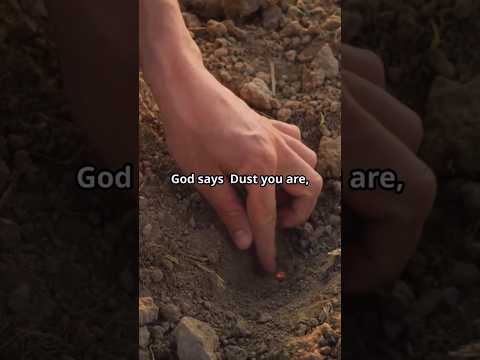
    In the aftermath of humanity’s first act of disobedience, God speaks not with rage, but with sobering truth. Genesis 3:17–19 contains one of the most haunting lines in all of scripture:

    “Dust you are, and to dust you shall return.”

    These words, spoken to Adam, echo not just through the pages of the Bible, but through the human experience itself. They touch something primal — our fear of mortality, our longing for meaning, and our place in the greater story of creation and fall. The words “dust you are” serve as a sacred reminder of our origin and our end.

    The Weight of Dust

    “Dust” in the Hebrew text is afar — the same dust from which God formed Adam in Genesis 2:7. It’s a poetic reversal: the breath of life given by God now returns to the ground. But this isn’t only a declaration of death. It’s a reminder of origin. Of humility. Of dependence.

    We are dust — fragile, fleeting, formed from the earth. And yet, infused with divine breath. Genesis 3:19 holds this tension: you are mortal, but you were meant for more.

    Mortality Is Not the Enemy

    Modern life often avoids the reality of death. We distract ourselves, numb ourselves, or hide behind comfort. But scripture does the opposite — it brings us face to face with mortality, not to depress us, but to awaken us.

    In Genesis 3:17–19, God reminds Adam (and all of us): your time is limited. Life is toil. Earth is no longer paradise. But mortality is also an invitation — to live aware, to live wisely, to live well.

    Rather than fear death, the Bible encourages us to number our days (Psalm 90:12), to remember that we are dust (Ecclesiastes 3:20), and to find meaning within our finitude. The phrase “dust you are” invites humility, reflection, and spiritual depth.

    The Curse… or the Call?

    Many read Genesis 3 as the “curse” passage — the punishment for the fall. And while consequences are certainly present, notice this: God never curses Adam or Eve directly. The ground is cursed. Pain increases. Work becomes laborious. But the words spoken to the humans are less about wrath and more about reality.

    To say “you are dust” is not to condemn — it’s to clarify.

    This passage doesn’t simply end paradise — it begins the path of redemption. A path where pain births purpose. Where death points us back to the Giver of life. Where our dusty origins become sacred reminders that every breath is grace. When God says “dust you are,” He’s not diminishing us — He’s grounding us.

    From Dust to Depth: A Spiritual Reflection

    Think of it this way: dust is easily scattered, but also holds the nutrients for new life. The ground is hard, but from it grows every tree, every flower, every field of wheat.

    The same is true of our lives. When we accept our mortality — when we live with the awareness that we are dust — we become more present. More grateful. More focused on what really matters.

    Genesis 3:17–19 isn’t just about death. It’s about anchoring life in eternal truth.

    You are not your achievements.
    You are not your possessions.
    You are dust… and breath… and beloved.

    Dust You Are – A Deep Look at Genesis 3:17–19 and Mortality.
    Dust You Are – A Deep Look at Genesis 3:17–19 and Mortality.

    A Thread Through Scripture

    Throughout the Bible, the theme of dust returns again and again — from Job sitting in ashes, to Jesus writing in the dust with His finger. Dust is where grief happens. Where healing begins. Where God meets the humble.

    At HolyThreadProject, we believe verses like Genesis 3:17–19 aren’t meant to scare us — they’re meant to sober us. To awaken us. To thread divine truth into daily life.

    P.S. If this reflection grounded you in something deeper, subscribe to HolyThreadProject on YouTube for weekly scripture shorts that uncover life-changing truths in the Word.

    #Genesis31719 #DustYouAre #HolyThreadProject #BibleReflection #FromDustToDust #SpiritualGrowth #BiblicalWisdom #FaithAndMortality #ChristianTeachings #ScriptureStudy