Tag: Spiritual growth

  • Leviticus 3 Explained | Bible Short on Peace Offerings.

    Leviticus 3 Explained | Bible Short on Peace Offerings and the Meaning of Fellowship with God.
    Leviticus 3 Explained | Bible Short on Peace Offerings.

    Leviticus 3 Explained | Bible Short on Peace Offerings.

    Among the many rituals described in the Old Testament, the peace offering holds a special place. Found in Leviticus 3, this practice was more than sacrifice; it was about fellowship, gratitude, and devotion. Understanding the peace offering sheds light on how ancient Israel related to God and how these lessons still speak to us today.

    In this post, we will explore the meaning of peace offerings, their role in the life of Israel, and how we can apply their wisdom in our spiritual journey.

    What Was the Peace Offering?

    The peace offering, also called the fellowship offering, was a unique sacrifice. Unlike offerings for sin or guilt, it symbolized harmony with God. Worshippers brought an animal from the herd or flock, and the best fat portions were burned on the altar. The remaining meat was shared in a sacred meal with family and community.

    This act represented thanksgiving and wholeness. It reminded the people that true peace comes from living in right relationship with God. The offering was not a burden but a celebration of restored fellowship.

    Lessons from Leviticus 3

    The instructions in Leviticus 3 emphasize giving the best to God. The fat portions, considered the richest part, were reserved for the altar. This showed reverence and devotion, reminding Israel that the Lord deserves honor above all.

    Another lesson is that peace is communal. The sacred meal was not for the individual alone but was shared. By eating together in God’s presence, families, and communities experienced unity rooted in faith.

    Symbolism of the Sacred Meal

    Sharing a meal has always been a powerful sign of fellowship. In Leviticus 3, the peace offering turned ordinary food into a sacred act. By combining worship, gratitude, and community, the meal became a living expression of harmony with God and one another.

    This symbolism points forward to deeper truths. Just as Israel celebrated peace through offerings, Christians see fulfillment in Christ, who reconciles humanity to God. The sacred meal foreshadows the communion table, where bread and cup proclaim peace through sacrifice.

    Applying the Teaching Today

    While we no longer practice animal sacrifices, the principles from Leviticus 3 still apply. We are called to honor God with our best, not leftovers. Gratitude should shape our worship, reminding us that peace flows from God’s presence.

    Practical applications include:

    • Thanksgiving: regularly pausing to recognize God’s goodness.
    • Generosity: sharing blessings with family, church, and community.
    • Fellowship: building unity through meals and conversations centered on faith.
    • Devotion: giving God priority in time, energy, and resources.

    When we live this way, our lives echo the peace offering: gratitude expressed in fellowship and devotion.

    Why It Still Matters

    The peace offering reveals that worship is not just about rituals but relationships. God invited Israel to celebrate His presence with joy and thankfulness. In a world often marked by anxiety and division, these lessons are timeless.

    By reflecting on Leviticus 3, we are reminded that peace is not found in possessions or success but in restored relationship with God. When that relationship is healthy, our connections with others also flourish.

    Conclusion

    The peace offering in Leviticus 3 highlights gratitude, fellowship, and devotion. It was a sacred meal where worshippers experienced harmony with God and each other. Though the practice belongs to ancient Israel, its meaning endures.

    Today, we can honor God by giving our best, practicing gratitude, and sharing peace in our communities. The offering teaches that true fellowship is sacred, and peace with God overflows into peace with others.

    Leviticus 3 Explained | Bible Short on Peace Offerings.
    Leviticus 3 Explained | Bible Short on Peace Offerings.

    PS: If this reflection encouraged you, consider subscribing to HolyThreadProject on YouTube for more short, powerful insights from the Bible each week.

    #Leviticus3 #PeaceOffering #BibleWisdom #OldTestament #BibleShorts #ScriptureExplained #HolyThreadProject #FaithAndPeace #SpiritualGrowth #BibleTeaching
  • Genesis 32: Wrestling with God and Finding His Blessing.

    Genesis 32: Wrestling with God and Finding His Blessing Through Surrender.
    Genesis 32: Wrestling with God and Finding His Blessing.

    Genesis 32: Wrestling with God and Finding His Blessing.

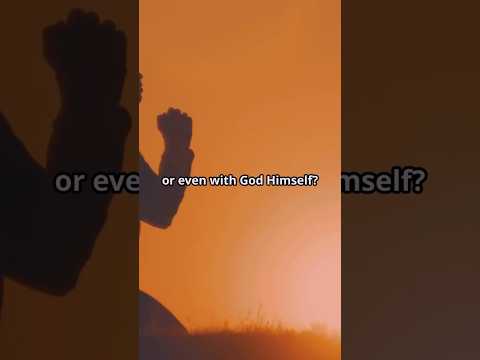
    Some of the most powerful moments in Scripture are also the most mysterious. One of these unforgettable encounters takes place in Genesis 32, where Jacob wrestles through the night with a man who is revealed to be far more than an ordinary opponent. This passage has stirred hearts and challenged minds for centuries because it touches on a universal human experience—wrestling with God in our lives.

    The Story of Jacob’s Night of Wrestling

    In Genesis 32, Jacob is on his way to meet his brother Esau after years of estrangement. He is anxious, unsure of how Esau will respond. That night, Jacob finds himself wrestling with a mysterious man until daybreak. This struggle is physical, but it is also deeply spiritual. The man touches Jacob’s hip, leaving him with a limp, yet Jacob refuses to let go without receiving a blessing.

    This moment is both an ending and a beginning for Jacob. It ends his old way of living and begins his transformation into Israel, the one who “struggles with God” and prevails.

    Wrestling with God in Our Lives

    We may not physically wrestle with God as Jacob did in Genesis 32, but we all face seasons where we struggle with questions, doubts, or challenges that push us to our limits. Sometimes prayer feels like wrestling—not because God resists us in cruelty, but because He is shaping us through the struggle.

    God uses these moments to test our faith, refine our character, and prepare us for greater purposes. Just as Jacob’s limp became a reminder of his encounter, our struggles leave marks that point to God’s work in us.

    The Blessing in the Struggle

    Jacob’s insistence on receiving a blessing before letting go speaks to the value of persistence. In Genesis 32, the blessing comes after the long night of wrestling, showing that endurance in faith is rewarded. This is not about overpowering God but about holding on to Him until we receive what He desires to give us—transformation, identity, and spiritual growth.

    The blessing was more than material prosperity; it was a new name, Israel, symbolizing a new purpose and calling. In the same way, when we wrestle with God and hold fast, we come away changed.

    Lessons from Genesis 32

    1. Faith Requires Persistence—Just as Jacob refused to let go, we must cling to God in prayer, even when answers seem delayed.
    2. Struggle Can Bring Transformation—Wrestling with God often results in deeper faith and greater humility.
    3. Blessings May Come with a Limp—Sometimes our struggles leave us with reminders of what we’ve endured, but also of God’s grace.

    These truths from Genesis 32 are not just for ancient times; they speak directly to the challenges and trials we face today.

    Applying This to Daily Life

    When you find yourself wrestling with fear, uncertainty, or unanswered prayers, remember Jacob’s example. Lean into God rather than away from Him. Be honest in your prayers. Ask boldly for His blessing, and trust that even if you walk away limping, you will walk away changed.

    Daily habits like consistent prayer, meditating on Scripture, and reflecting on God’s past faithfulness can strengthen us for these spiritual struggles.

    Conclusion

    Genesis 32 is more than a story of an all-night struggle; it is a portrait of faith in action. Jacob’s wrestling shows us that God meets us in our struggles, not to defeat us, but to shape us into who we are meant to be. The blessing we receive may not look like what we expect, but it will always carry His mark.

    When the wrestling comes—and it will—hold on. Because on the other side of the struggle, there is always transformation.

    Genesis 32: Wrestling with God and Finding His Blessing.
    Genesis 32: Wrestling with God and Finding His Blessing.

    P.S. If this reflection encouraged your faith, don’t miss our future Scripture insights and Bible study shorts—subscribe to HolyThreadProject on YouTube and grow with us in God’s Word.

    #BibleStudy #Genesis32 #WrestlingWithGod #Faith #Scripture

  • Dust You Are – A Deep Look at Genesis 3:17–19 and Mortality.

    Dust You Are – A Deep Look at Genesis 3:17–19 and Mortality | Toil & Hope Today.
    Dust You Are – A Deep Look at Genesis 3:17–19 and Mortality.

    Dust You Are – A Deep Look at Genesis 3:17–19 and Mortality.

    In the aftermath of humanity’s first act of disobedience, God speaks not with rage, but with sobering truth. Genesis 3:17–19 contains one of the most haunting lines in all of scripture:

    “Dust you are, and to dust you shall return.”

    These words, spoken to Adam, echo not just through the pages of the Bible, but through the human experience itself. They touch something primal — our fear of mortality, our longing for meaning, and our place in the greater story of creation and fall. The words “dust you are” serve as a sacred reminder of our origin and our end.

    The Weight of Dust

    “Dust” in the Hebrew text is afar — the same dust from which God formed Adam in Genesis 2:7. It’s a poetic reversal: the breath of life given by God now returns to the ground. But this isn’t only a declaration of death. It’s a reminder of origin. Of humility. Of dependence.

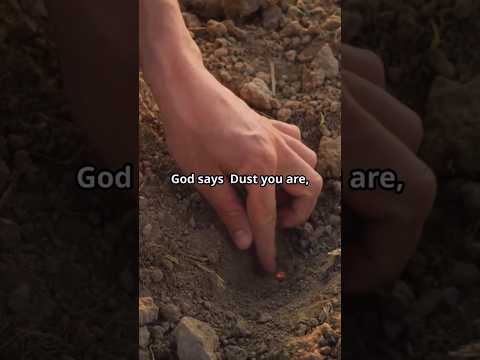
    We are dust — fragile, fleeting, formed from the earth. And yet, infused with divine breath. Genesis 3:19 holds this tension: you are mortal, but you were meant for more.

    Mortality Is Not the Enemy

    Modern life often avoids the reality of death. We distract ourselves, numb ourselves, or hide behind comfort. But scripture does the opposite — it brings us face to face with mortality, not to depress us, but to awaken us.

    In Genesis 3:17–19, God reminds Adam (and all of us): your time is limited. Life is toil. Earth is no longer paradise. But mortality is also an invitation — to live aware, to live wisely, to live well.

    Rather than fear death, the Bible encourages us to number our days (Psalm 90:12), to remember that we are dust (Ecclesiastes 3:20), and to find meaning within our finitude. The phrase “dust you are” invites humility, reflection, and spiritual depth.

    The Curse… or the Call?

    Many read Genesis 3 as the “curse” passage — the punishment for the fall. And while consequences are certainly present, notice this: God never curses Adam or Eve directly. The ground is cursed. Pain increases. Work becomes laborious. But the words spoken to the humans are less about wrath and more about reality.

    To say “you are dust” is not to condemn — it’s to clarify.

    This passage doesn’t simply end paradise — it begins the path of redemption. A path where pain births purpose. Where death points us back to the Giver of life. Where our dusty origins become sacred reminders that every breath is grace. When God says “dust you are,” He’s not diminishing us — He’s grounding us.

    From Dust to Depth: A Spiritual Reflection

    Think of it this way: dust is easily scattered, but also holds the nutrients for new life. The ground is hard, but from it grows every tree, every flower, every field of wheat.

    The same is true of our lives. When we accept our mortality — when we live with the awareness that we are dust — we become more present. More grateful. More focused on what really matters.

    Genesis 3:17–19 isn’t just about death. It’s about anchoring life in eternal truth.

    You are not your achievements.
    You are not your possessions.
    You are dust… and breath… and beloved.

    Dust You Are – A Deep Look at Genesis 3:17–19 and Mortality.
    Dust You Are – A Deep Look at Genesis 3:17–19 and Mortality.

    A Thread Through Scripture

    Throughout the Bible, the theme of dust returns again and again — from Job sitting in ashes, to Jesus writing in the dust with His finger. Dust is where grief happens. Where healing begins. Where God meets the humble.

    At HolyThreadProject, we believe verses like Genesis 3:17–19 aren’t meant to scare us — they’re meant to sober us. To awaken us. To thread divine truth into daily life.

    P.S. If this reflection grounded you in something deeper, subscribe to HolyThreadProject on YouTube for weekly scripture shorts that uncover life-changing truths in the Word.

    #Genesis31719 #DustYouAre #HolyThreadProject #BibleReflection #FromDustToDust #SpiritualGrowth #BiblicalWisdom #FaithAndMortality #ChristianTeachings #ScriptureStudy

  • Pain & Desire in Genesis 3:16 – A Deep Biblical Reflection.

    Pain & Desire | Genesis 3:16 Explained – A Deep Biblical Reflection on Consequence.
    Pain & Desire in Genesis 3:16 – A Deep Biblical Reflection.

    Pain & Desire in Genesis 3:16 – A Deep Biblical Reflection

    When we think of Genesis 3:16, many of us recall a passage that feels weighty and difficult:

    “I will make your pains in childbearing very severe; with painful labor you will give birth to children. Your desire will be for your husband, and he will rule over you.”

    At first glance, it reads like a curse — punishment handed down after the fall. But what if this verse, often seen through a lens of judgment, is also a mirror? What if pain & desire are not merely consequences… but invitations to deeper awareness?

    The Language of Pain

    Pain in childbirth is the most literal interpretation of this verse. But in a broader sense, this speaks to the pain woven into creation, relationship, and transformation. Pain often marks the beginning of something new — not just physically, but spiritually.

    Throughout scripture, pain is not always portrayed as punishment. In fact, it’s often the beginning of purpose. From Jacob’s limp to Paul’s thorn, pain refines and redirects. Genesis 3:16 may be the first instance where we see pain tied to purpose — a laboring not just of the body, but of the soul.

    What Desire Reveals

    The second half of the verse — “your desire will be for your husband” — has sparked centuries of theological debate. Some view this as hierarchy, others as emotional dependency, and still others as a reflection of broken intimacy. But in Hebrew, the word used for “desire” (teshuqah) appears only three times in the Bible, and each time, it speaks of intense longing.

    Desire, like pain, is not inherently sinful. It’s directional. It exposes what the heart reaches for. In the case of Genesis 3:16, desire for the other may reflect a longing for unity that has now been fractured. It’s a symptom of the disconnection brought by the fall — and a signal pointing toward redemption.

    More Than Just a Curse

    Genesis 3:16 is often labeled part of “the curse,” but look closer: God never directly curses the man or woman. The serpent and the ground are cursed — not humanity. What happens to Adam and Eve is consequence, yes, but it’s also context. Pain & desire become the canvas upon which human life, struggle, and redemption unfold.

    This verse doesn’t close the door on God’s love — it reveals the cost of free will and the complexity of relationships. It’s not just about Eve. It’s about all of us. We live in a world of pain and desire, constantly navigating how to hold both without losing our spiritual center.

    Pain & Desire in Our Own Lives

    Think about your own journey: What have your greatest pains taught you? What do your strongest desires say about your soul?

    Maybe you’ve longed for connection, purpose, or healing — and that desire felt overwhelming. Or maybe pain brought you to your knees but also brought you back to God.

    Genesis 3:16 isn’t meant to condemn. It’s meant to illuminate. Pain and desire are both part of the human story — and both can lead us closer to the Divine.

    Holy Threads in Scripture

    At HolyThreadProject, we believe that scripture isn’t just to be read — it’s to be wrestled with. Genesis 3:16 is one of those verses that invites us into deeper reflection. It’s not a verse to ignore or gloss over. It’s one that threads its way through all of life’s questions: Why do we suffer? Why do we long? Where is God in all of this?

    The beauty of scripture is that it doesn’t offer simple answers — it invites us into sacred dialogue.

    Pain & Desire in Genesis 3:16 – A Deep Biblical Reflection
    Pain & Desire in Genesis 3:16 – A Deep Biblical Reflection

    P.S. If this reflection moved you, consider subscribing to HolyThreadProject on YouTube for weekly scripture shorts and deeper dives into the threads that tie scripture to our lives.

    #Genesis316 #BibleWisdom #HolyThreadProject #SpiritualGrowth #FaithReflection #DesireInTheBible #BiblicalInsight #ChristianLifeLessons #ScriptureStudy #PainAndDesire